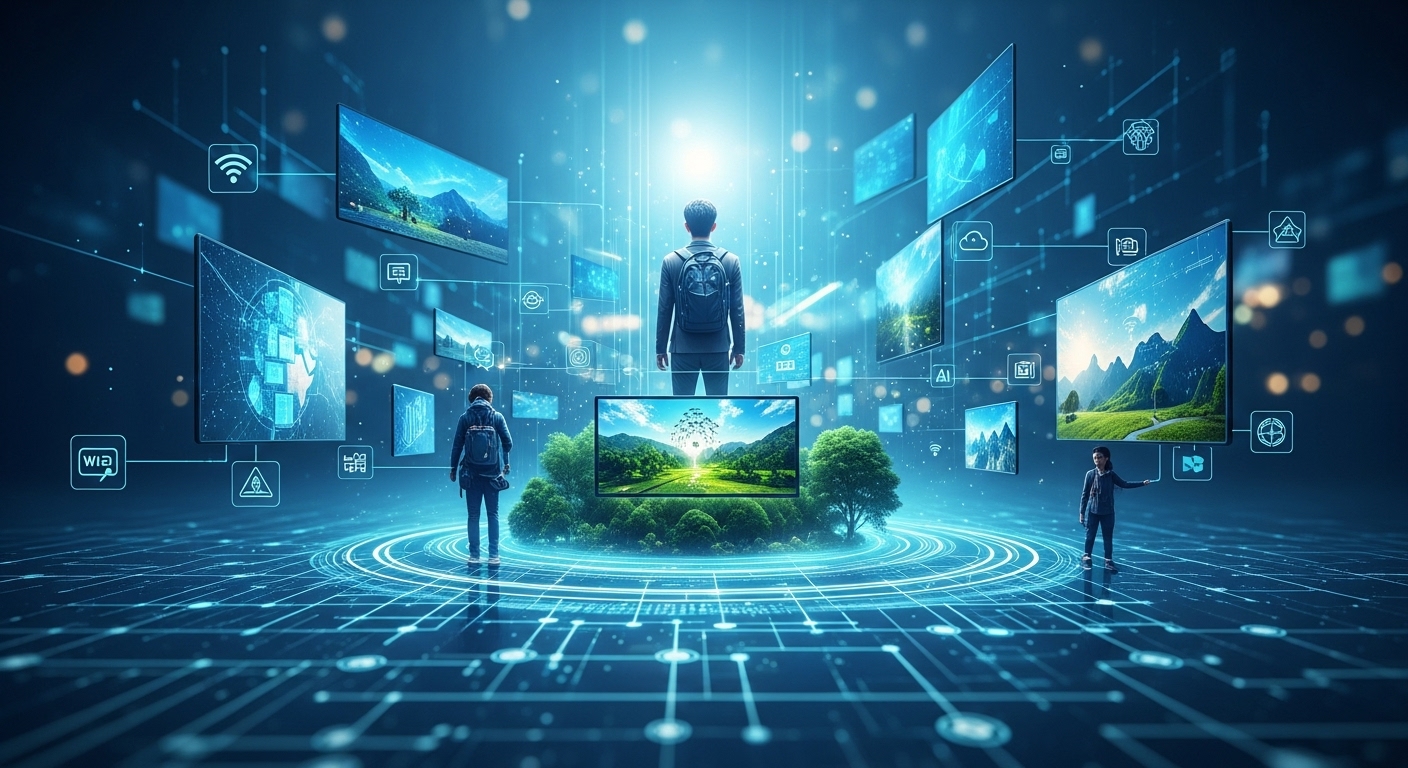





Artificial Intelligence (AI) is no longer a futuristic concept reserved for science fiction. Over the past decade, it has evolved from experimental algorithms in labs to a technology that actively shapes our daily lives. From smart assistants in our homes to advanced recommendation systems on our favorite streaming platforms, AI is quietly revolutionizing the way we live, work, and interact with the world around us. This blog explores how AI is making its mark on everyday life, its benefits, challenges, and what the future holds.
AI in Personal Devices
One of the most visible applications of AI is in personal devices. Smartphones, tablets, smartwatches, and other gadgets now come with AI-powered features designed to make life easier. Voice assistants like Siri, Alexa, and Google Assistant rely on AI to understand natural language and respond accurately. These tools can set reminders, control smart home devices, answer questions, and even provide personalized recommendations based on user habits.
AI also plays a major role in photography on personal devices. Modern smartphone cameras use AI algorithms to detect faces, optimize lighting, and enhance image quality automatically. Features such as portrait mode, night photography, and real-time video enhancement rely heavily on AI to deliver professional-looking results with minimal user effort.
Furthermore, AI helps in device security through facial recognition and behavioral biometrics. This not only ensures a smoother user experience but also strengthens the security of personal data.
AI in Healthcare
The healthcare industry is one of the most profoundly impacted by AI. From diagnostics to patient care, AI-driven tools are helping doctors make faster, more accurate decisions. Machine learning algorithms can analyze medical images, such as X-rays or MRIs, to detect anomalies that might be missed by the human eye. This significantly improves early detection of diseases such as cancer, where timely intervention can save lives.
AI also supports personalized medicine. By analyzing a patient’s medical history, genetic data, and lifestyle factors, AI systems can recommend tailored treatment plans. This approach reduces trial-and-error prescribing and increases the likelihood of positive outcomes. Telemedicine, powered by AI, enables virtual consultations with automated symptom checkers, allowing patients to access healthcare services without visiting clinics physically.
Moreover, AI is transforming drug discovery. Traditional drug development is a time-consuming and expensive process. AI models can analyze vast datasets to predict how molecules will interact, significantly accelerating the development of new treatments and vaccines.
AI in Transportation
Transportation is another domain where AI is creating profound changes. Self-driving cars, though still in the experimental and regulatory phases, rely heavily on AI to interpret data from sensors and make real-time driving decisions. These vehicles have the potential to reduce accidents caused by human error, optimize traffic flow, and improve fuel efficiency.
Beyond autonomous vehicles, AI is enhancing public transportation systems. AI-driven predictive analytics help transit authorities optimize routes, reduce congestion, and maintain schedules more efficiently. Ride-sharing apps also use AI algorithms to match drivers with passengers, predict demand, and calculate dynamic pricing. This not only improves user experience but also contributes to more sustainable urban transportation solutions.
AI in Education
Education is experiencing a quiet revolution thanks to AI. Intelligent tutoring systems can analyze student performance and provide personalized learning paths. These systems identify areas where a student is struggling and suggest targeted exercises or resources. As a result, learning becomes more adaptive and effective, catering to individual strengths and weaknesses rather than following a one-size-fits-all approach.
AI is also transforming administrative tasks in educational institutions. From automating grading and attendance tracking to managing schedules and admissions, AI reduces the workload on educators, allowing them to focus more on teaching and student engagement. Furthermore, AI-powered language translation tools make educational content accessible to students worldwide, breaking down linguistic barriers in learning.
AI in Entertainment
Entertainment is one of the most consumer-facing applications of AI. Streaming platforms, music services, and gaming industries all utilize AI to enhance user experience. Recommendation engines powered by AI analyze viewing or listening habits to suggest personalized content, keeping users engaged and discovering new favorites.
In the gaming industry, AI is responsible for creating responsive non-player characters (NPCs), procedural content generation, and adaptive difficulty levels. This makes games more immersive and enjoyable. Additionally, AI tools in music and video production allow creators to automate editing, generate content, and even compose music, opening new avenues for creativity.
AI in Business and Industry
Businesses across sectors are leveraging AI to improve efficiency, reduce costs, and make data-driven decisions. In customer service, AI chatbots and virtual assistants handle inquiries, complaints, and transactions, providing instant responses and freeing human agents for complex issues.
In retail, AI analyzes consumer behavior to optimize inventory, predict demand, and personalize marketing campaigns. AI-powered systems can also detect fraudulent transactions, enhancing financial security for both businesses and consumers.
Manufacturing and logistics have also benefited immensely. Predictive maintenance, enabled by AI, allows machines to be serviced before breakdowns occur, reducing downtime and operational costs. AI-driven supply chain management helps companies forecast demand, optimize routes, and streamline production processes, leading to increased productivity and reduced waste.
Ethical Considerations and Challenges
While AI brings immense benefits, it also raises ethical questions and challenges. Privacy concerns are at the forefront, as AI systems often rely on vast amounts of personal data. Ensuring that this data is used responsibly and securely is crucial.
Bias in AI algorithms is another concern. If AI systems are trained on biased data, they can perpetuate or even amplify societal inequalities. Addressing bias requires careful dataset curation, continuous monitoring, and transparent decision-making processes.
Moreover, the rise of AI has implications for employment. While AI automates routine and repetitive tasks, there is a growing need for human workers to adapt and acquire skills that complement AI rather than compete with it. Reskilling and upskilling programs are essential to ensure that the workforce remains relevant in an AI-driven economy.
The Future of AI in Everyday Life
The future of AI promises even deeper integration into our daily routines. Smart cities powered by AI will optimize energy usage, reduce traffic congestion, and improve public safety. Healthcare could become even more proactive, with AI systems predicting illnesses before they manifest. Education may become fully personalized, adapting dynamically to the learning pace and style of each student.
AI may also enhance human creativity. Tools capable of generating art, music, and literature could serve as collaborators for artists, writers, and designers, pushing the boundaries of imagination. Additionally, AI-driven environmental monitoring could play a critical role in combating climate change by analyzing data to suggest actionable solutions for conservation and sustainability.
However, as AI becomes more sophisticated, it will be essential to maintain a balance between technological advancement and human values. Responsible AI development, ethical oversight, and inclusive design principles will be vital to ensure that AI benefits society as a whole without compromising privacy, fairness, or human dignity.
Conclusion
Artificial Intelligence has shifted from being a futuristic idea to an integral part of everyday life. Its applications span personal devices, healthcare, transportation, education, entertainment, and business, improving efficiency, personalization, and convenience across sectors. While AI brings remarkable opportunities, it also presents challenges that require careful consideration, including ethical concerns, bias, and employment impacts.
As AI continues to evolve, its influence on society will only grow stronger. By embracing AI responsibly and ethically, we can harness its potential to create smarter, more efficient, and inclusive communities. The journey of AI is just beginning, and its integration into daily life promises to reshape the world in ways we are only beginning to imagine.
The era of AI is not a distant future—it is happening now, quietly transforming the way we live, learn, work, and play. Embracing this change with awareness and responsibility will ensure that AI becomes a force for good, enriching human life in unprecedented ways.