




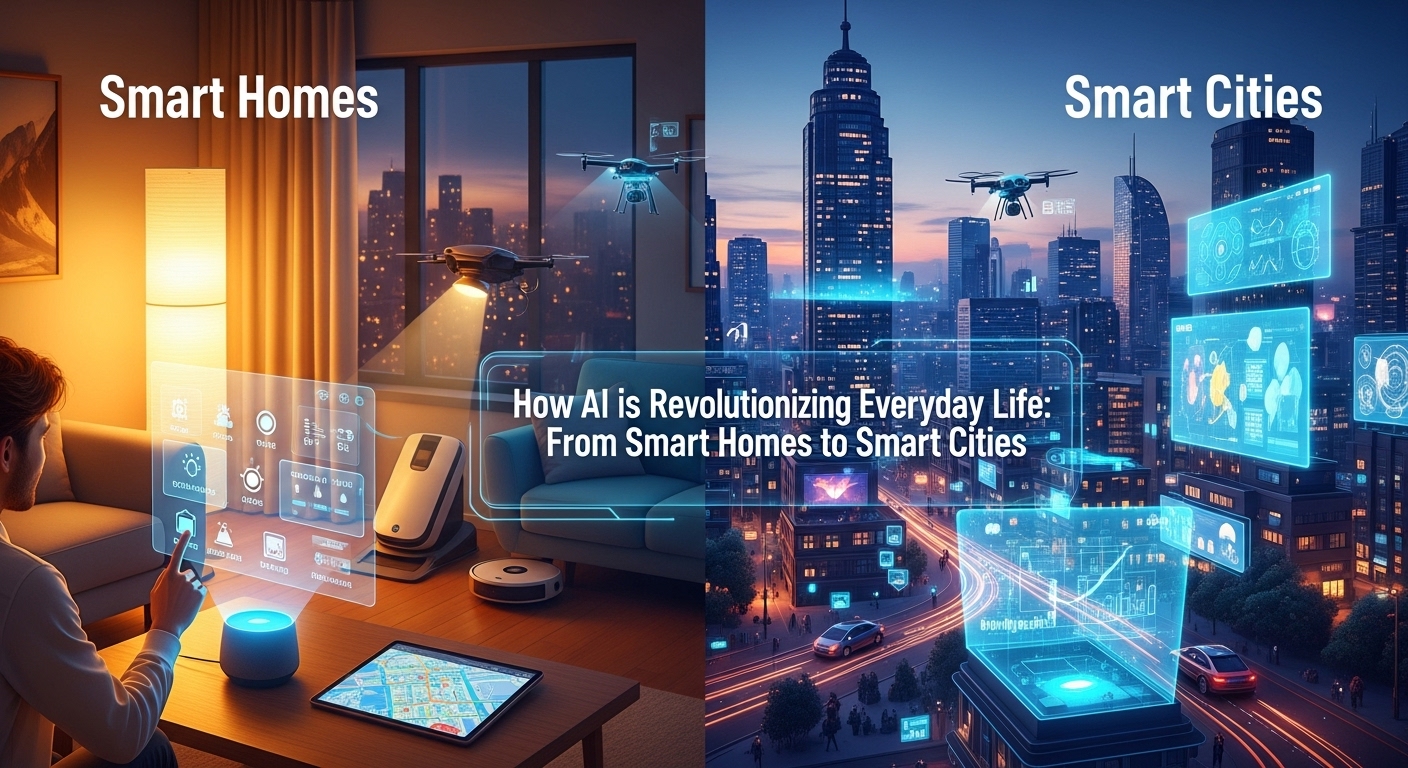
Artificial Intelligence (AI) is no longer a futuristic concept confined to science fiction or high-tech labs. It has become an integral part of our daily lives, quietly reshaping the way we work, communicate, and even think. From the moment we wake up to the time we go to bed, AI technologies are influencing countless activities and processes. Here’s a look at some of the most impactful use cases of AI that are transforming everyday life.
1. Personalized Recommendations
Whether you’re streaming music, shopping online, or scrolling through social media, AI is behind the personalized recommendations that make your experience smoother and more enjoyable. By analyzing your preferences, behavior, and past interactions, AI algorithms suggest movies, products, songs, or even news articles tailored just for you. This not only saves time but also helps you discover new favorites effortlessly.
2. Virtual Assistants and Smart Homes
AI-powered virtual assistants like Siri, Alexa, and Google Assistant have become household names. They help with tasks ranging from setting reminders and answering questions to controlling smart home devices like lights, thermostats, and security cameras. These assistants learn from user habits to improve their responses and provide a more seamless, hands-free experience.
3. Healthcare and Diagnostics
AI is revolutionizing healthcare by enhancing diagnostic accuracy and personalizing treatment plans. Machine learning models analyze medical images, predict disease risks, and even assist in drug discovery. AI-powered chatbots provide preliminary medical advice and mental health support, making healthcare more accessible and efficient for many people.
4. Autonomous Vehicles and Transportation
Self-driving cars, powered by AI, are gradually moving from testing phases to real-world applications. AI helps these vehicles interpret sensor data, make decisions on the road, and optimize routes for fuel efficiency and safety. Beyond autonomous vehicles, AI also plays a role in traffic management systems, reducing congestion and improving public transportation schedules.
5. Customer Service Automation
Many businesses now use AI chatbots and virtual agents to handle customer inquiries around the clock. These AI systems can resolve common issues, guide users through troubleshooting, and escalate complex problems to human representatives. This approach not only improves response times but also frees human agents to focus on more nuanced tasks.
6. Financial Services and Fraud Detection
AI is transforming banking and finance by automating processes such as credit scoring, risk assessment, and personalized financial advice. One of the critical applications is fraud detection, where AI analyzes transaction patterns in real-time to flag suspicious activities, protecting consumers and institutions from potential losses.
7. Education and Personalized Learning
AI is changing how we learn by providing adaptive learning platforms that adjust content based on individual student needs. It offers interactive tutoring, instant feedback, and even language translation, making education more accessible globally. AI also helps educators identify students who need additional support, fostering a more inclusive learning environment.
8. Content Creation and Creativity
From AI-generated music and artwork to automated writing assistants, AI is becoming a collaborator in creative processes. It can help generate ideas, automate repetitive tasks, and even mimic artistic styles, enabling creators to push boundaries and experiment with new forms of expression.
Conclusion
AI’s influence on everyday life is profound and continuously expanding. It enhances convenience, improves efficiency, and opens new possibilities across various sectors. As AI technologies advance, their integration into our daily routines will deepen, making it essential to understand both their potential and the ethical considerations they bring. Keeping an eye on these transformative use cases helps us appreciate how AI is shaping the present and future of human experience.