



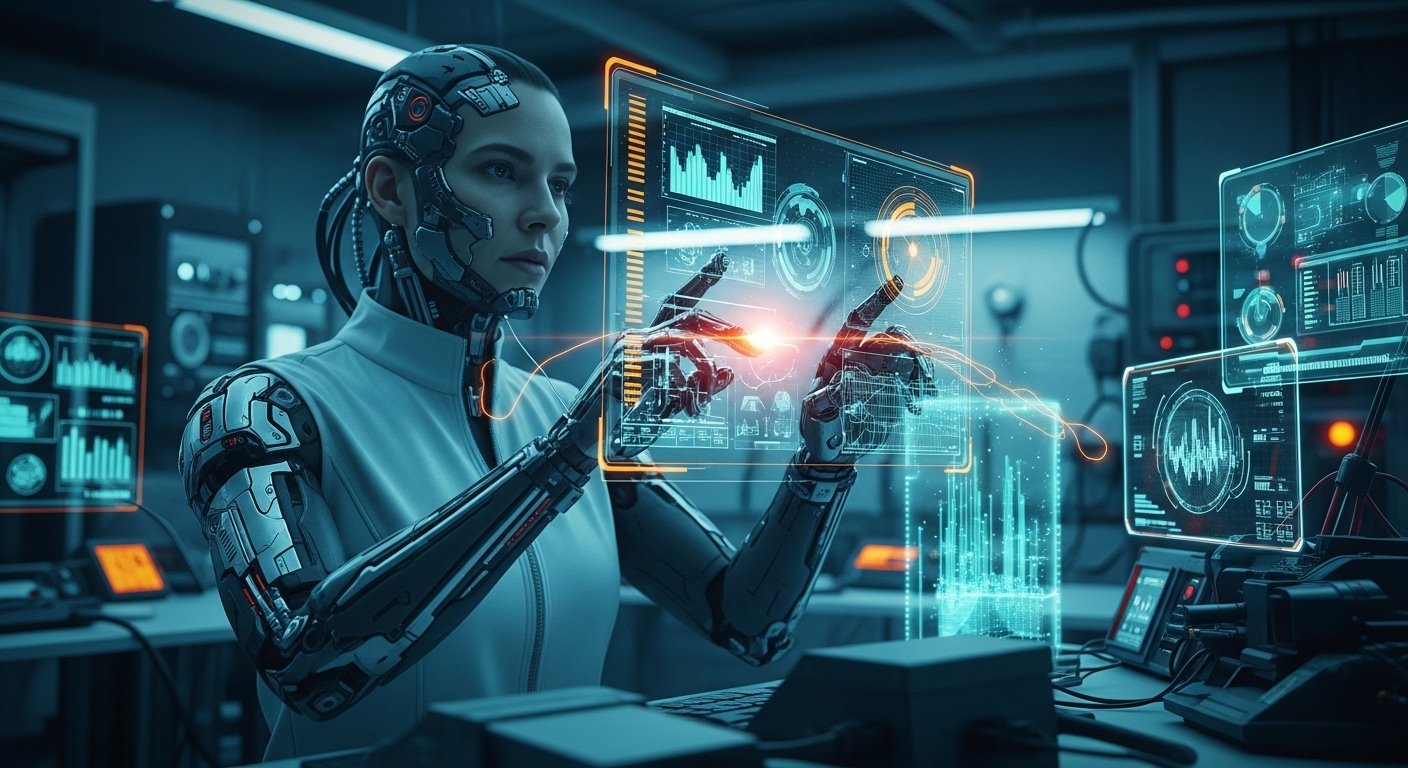
Technology is no longer a mere convenience; it has become the backbone of human progress. From the way we communicate to the way we work, learn, and entertain ourselves, technological advancements continuously redefine our daily experiences. In this exploration, we will dive deep into the various facets of modern technology, its evolution, impact, and the future possibilities it holds.
The Evolution of Technology
The story of technology is as old as human civilization itself. Early inventions like the wheel, fire, and simple tools laid the foundation for complex innovations in the modern era. The Industrial Revolution marked a significant turning point, introducing machinery, electricity, and mass production, drastically transforming societies.
Fast forward to the digital age, technology has leaped from mechanical devices to digital systems, enabling instantaneous communication, global connectivity, and unprecedented computational capabilities. The evolution from bulky computers to smartphones and wearable devices illustrates how technology has become deeply integrated into human life.
Artificial Intelligence: Redefining Intelligence
Artificial Intelligence (AI) is perhaps the most transformative force in contemporary technology. AI refers to systems that can perform tasks traditionally requiring human intelligence, including problem-solving, pattern recognition, language understanding, and decision-making. Machine learning, a subset of AI, allows computers to learn from data and improve over time without explicit programming.
Applications of AI are vast and growing. In healthcare, AI algorithms assist in diagnosing diseases, predicting patient outcomes, and personalizing treatment plans. In business, AI optimizes supply chains, enhances customer experiences, and drives predictive analytics. The potential of AI extends to autonomous vehicles, robotics, and natural language processing, shaping how humans interact with machines.
The Internet of Things: Connecting Everything
The Internet of Things (IoT) represents the next step in connectivity, linking everyday objects to the internet and enabling them to collect, exchange, and act on data. Smart homes, wearable devices, and industrial IoT solutions illustrate how this interconnectedness is revolutionizing daily life and business operations.
Smart devices offer convenience and efficiency, allowing users to control home lighting, security systems, and appliances remotely. In industries, IoT optimizes operations by providing real-time monitoring, predictive maintenance, and data-driven insights. As IoT expands, the challenge of ensuring security and privacy becomes paramount, necessitating robust protocols and regulations.
Cybersecurity: Guarding the Digital Realm
As technology advances, so do threats to digital security. Cybersecurity encompasses the strategies, tools, and practices designed to protect networks, devices, and data from unauthorized access or attacks. With increasing reliance on digital systems, cybersecurity is more critical than ever.
Cyber attacks can target individuals, corporations, and governments, with consequences ranging from financial loss to national security threats. Modern cybersecurity solutions include encryption, multi-factor authentication, intrusion detection systems, and artificial intelligence-driven threat detection. Cybersecurity is not just a technical concern; it is a societal imperative as technology becomes entwined with essential services.
Cloud Computing: The Power of the Cloud
Cloud computing has revolutionized how data is stored, processed, and accessed. By enabling users to access resources over the internet, cloud computing reduces the need for local hardware and provides scalable, cost-effective solutions for businesses and individuals.
Enterprises leverage cloud services for data storage, application hosting, and collaborative work environments. Cloud-based platforms also facilitate the development and deployment of AI models, big data analytics, and software-as-a-service applications. As cloud technology evolves, concepts like edge computing and hybrid cloud solutions are emerging, further optimizing performance and efficiency.
Blockchain: Beyond Cryptocurrency
Blockchain technology, initially popularized by cryptocurrencies like Bitcoin, has applications far beyond digital money. A blockchain is a decentralized, immutable ledger that records transactions across multiple nodes, ensuring transparency and security.
Industries are exploring blockchain for supply chain management, digital identity verification, smart contracts, and secure data sharing. Its decentralized nature reduces the need for intermediaries, enhances accountability, and mitigates fraud risks. As blockchain matures, regulatory frameworks and scalability solutions will play a crucial role in its widespread adoption.
The Rise of Quantum Computing
Quantum computing represents a paradigm shift in computational capabilities. Unlike classical computers, which use bits to represent data as 0 or 1, quantum computers use qubits that can exist in multiple states simultaneously, enabling exponential computational power.
Quantum computing has the potential to solve problems beyond the reach of classical machines, including complex simulations, cryptography, and optimization tasks. While practical, large-scale quantum computers are still in development, research breakthroughs are accelerating, promising transformative impacts on science, medicine, and technology.
Robotics and Automation: Shaping Industries
Robotics and automation are transforming industries by enhancing efficiency, precision, and safety. Modern robots are capable of performing complex tasks in manufacturing, healthcare, logistics, and even hazardous environments where human intervention is risky.
Automation technologies, including robotic process automation (RPA), streamline repetitive tasks, reduce errors, and free human workers for higher-level decision-making. In healthcare, robotic surgery systems allow minimally invasive procedures, improving patient outcomes. The integration of AI with robotics further enables adaptive and intelligent automation solutions.
5G and Connectivity: The Speed of Progress
The rollout of 5G networks is accelerating digital transformation by offering unprecedented speed, low latency, and massive device connectivity. 5G enables seamless streaming, real-time data transmission, and enhanced experiences for applications like augmented reality, virtual reality, and autonomous vehicles.
With enhanced connectivity, smart cities, remote healthcare, and industrial automation can operate more efficiently and reliably. However, the global adoption of 5G also presents challenges in infrastructure development, spectrum allocation, and cybersecurity considerations.
Virtual Reality and Augmented Reality: Blurring the Lines
Virtual Reality (VR) and Augmented Reality (AR) are changing how humans interact with digital content. VR immerses users in a fully digital environment, while AR overlays digital information onto the real world. These technologies have applications in gaming, education, healthcare, design, and training.
In education, VR simulations provide interactive learning experiences, while AR enhances real-world training scenarios. In healthcare, surgeons can practice complex procedures using VR, and AR can assist in diagnostics or patient care. As VR and AR technologies become more accessible, their potential to reshape industries and daily experiences grows exponentially.
Sustainable Technology: Innovation for the Planet
As technological innovation accelerates, sustainability has become a critical consideration. Sustainable technology seeks to minimize environmental impact while maximizing efficiency and productivity. Renewable energy sources, energy-efficient data centers, and eco-friendly manufacturing processes illustrate the shift toward greener solutions.
Electric vehicles, smart grids, and sustainable materials are increasingly integrated into daily life and industrial operations. Technological advancements not only reduce carbon footprints but also enable better monitoring, optimization, and management of resources for a more sustainable future.
Ethical Considerations in Technology
With great power comes great responsibility. As technology evolves, ethical considerations become paramount. Issues like data privacy, algorithmic bias, AI decision-making, and digital inclusion require careful attention.
Policymakers, technologists, and society must collaborate to establish ethical frameworks that ensure technology benefits humanity while minimizing harm. Transparent algorithms, responsible AI deployment, and equitable access to technology are essential principles for fostering trust and accountability in the digital era.
The Future of Technology: Possibilities and Challenges
The future of technology is both exciting and complex. Emerging fields like synthetic biology, space exploration, brain-computer interfaces, and nanotechnology hold enormous promise. The convergence of AI, IoT, blockchain, and quantum computing may redefine industries, economies, and societies in ways we can only begin to imagine.
However, challenges remain. Societal adaptation, cybersecurity risks, ethical dilemmas, and technological disparities must be addressed. Balancing innovation with responsibility will be crucial to ensuring technology remains a tool for progress rather than a source of disruption.
Conclusion
Technology is a dynamic force shaping the human experience. Its evolution from simple tools to sophisticated systems like AI, quantum computing, and IoT demonstrates humanity’s relentless pursuit of progress. While the possibilities are limitless, the responsibilities are equally profound.
By embracing innovation, fostering ethical development, and prioritizing sustainability, we can harness technology to build a future that enhances lives, empowers societies, and unlocks the full potential of human creativity. The journey of technology is far from over; it is an ongoing adventure, where each breakthrough opens doors to new horizons and challenges us to rethink what is possible.