




Introduction
Language is the foundation of human communication, but the diversity of languages has always created barriers. In today’s interconnected world, people travel, work, and collaborate across borders more than ever. Yet, a simple conversation between two people who do not share a common language can still feel like an impossible challenge. Artificial Intelligence (AI) has stepped into this gap with real-time language translation, transforming how people communicate across linguistic boundaries.
AI-powered translation tools are no longer science fiction. They are embedded in smartphones, conference software, earbuds, smart assistants, and even live-streaming platforms. With the rise of machine learning, natural language processing, and powerful neural networks, AI systems can now listen, understand, translate, and speak words almost instantly. This breakthrough not only makes communication smoother but also reshapes business, education, travel, diplomacy, and everyday life.
This article explores how AI translates languages in real time, the technologies behind it, its strengths and challenges, and the enormous impact it is having on the world.
The Evolution of Language Translation
Language translation is not new. Humans have always relied on interpreters, bilingual speakers, or dictionaries to bridge language gaps. Written translation has existed for centuries, allowing ideas to spread between civilizations. However, these methods were time-consuming and often inaccessible to ordinary people.
The digital age brought computer-assisted translation, where software helped human translators with word suggestions and grammar checks. Early machine translation appeared in the mid-20th century, but results were clumsy. Direct word-for-word translations often lost meaning, failed to capture idioms, and produced comical or nonsensical results.
With the rise of the internet and global communication, the demand for instant translation grew rapidly. Simple phrase translators became common in the early 2000s, but they were still inaccurate. The real revolution began when AI, powered by deep learning and big data, entered the picture. Modern AI systems can learn languages like humans do—by seeing patterns in vast amounts of text, learning grammar rules, and adapting to context. This leap forward made real-time translation possible.
How Real-Time AI Translation Works
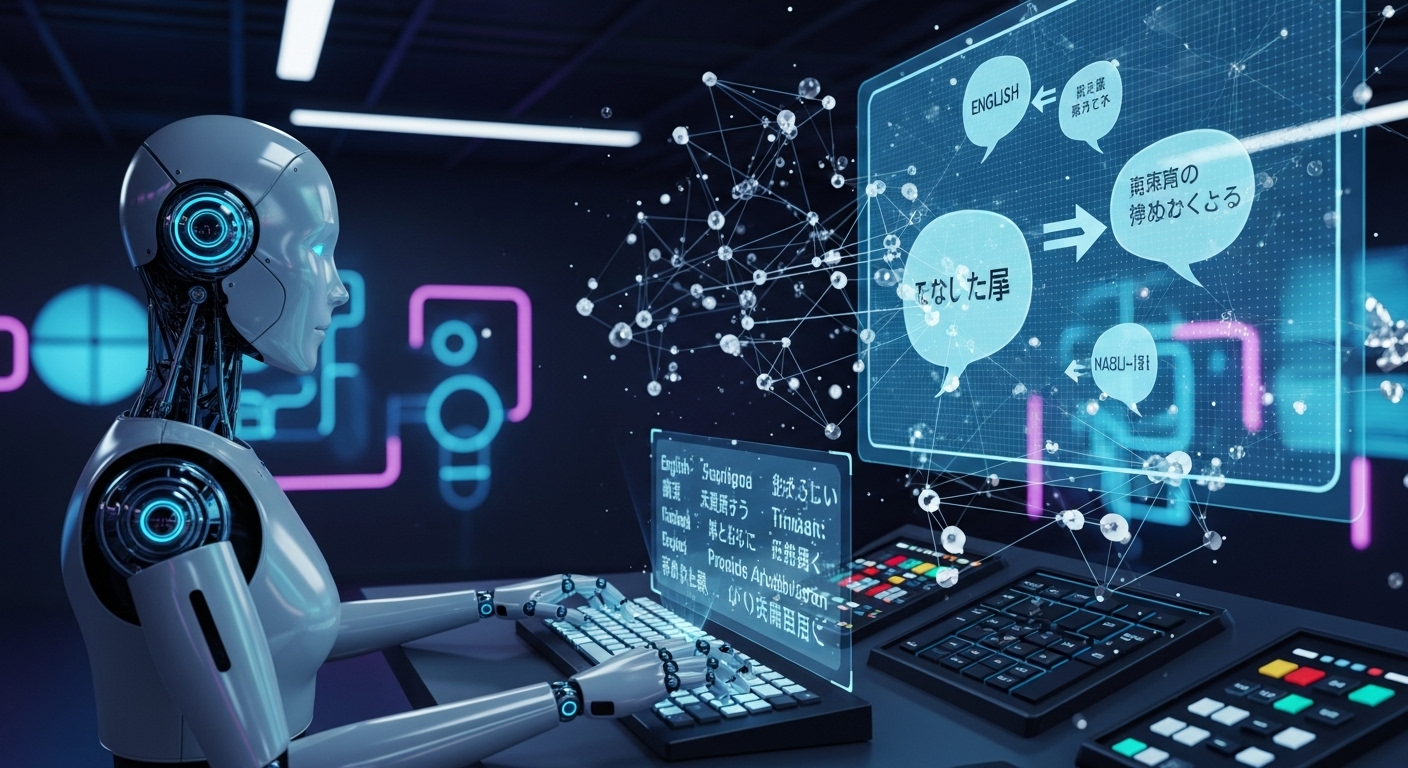
Real-time translation is not magic. It is a highly sophisticated process that happens in fractions of a second. The journey from hearing a sentence in one language to delivering it in another involves multiple stages.
Step 1: Speech Recognition
The first step is to capture spoken words and convert them into text. This is achieved using Automatic Speech Recognition (ASR). The system listens to the speaker’s voice, breaks the audio into sound units, identifies phonemes, and then maps them to words.
Modern ASR systems are trained on enormous datasets of human speech. They are designed to recognize different accents, speech speeds, and even background noise. Without accurate speech recognition, real-time translation cannot function effectively.
Step 2: Language Understanding
Once the words are transcribed, the AI needs to understand the sentence structure and meaning. This is where Natural Language Processing (NLP) and Natural Language Understanding (NLU) come into play.
NLP algorithms analyze grammar, syntax, and semantics. The system looks at the order of words, their relationships, and the context. For example, the word “bank” can mean a financial institution or the side of a river. NLP ensures the AI chooses the correct meaning based on context.
Step 3: Machine Translation
The next stage is the actual translation. This is powered by Neural Machine Translation (NMT), which uses deep learning models, often based on transformer architectures. Instead of translating word by word, NMT looks at entire sentences and paragraphs, capturing context and nuance.
The system uses bilingual text corpora—massive collections of translated texts—to learn how words and phrases are typically translated. Over time, the AI develops a rich understanding of idioms, sentence structures, and cultural nuances.
Step 4: Text-to-Speech Conversion
Finally, the translated text is converted back into spoken words using Text-to-Speech (TTS) systems. Modern TTS is capable of producing natural-sounding voices with intonation, rhythm, and emotion, making the translation sound human rather than robotic.
The entire process—speech recognition, language understanding, machine translation, and text-to-speech—takes place in real time, often within a second.
The Role of Neural Networks and Transformers
At the core of real-time AI translation are neural networks. These systems mimic how the human brain processes information. Early models relied on statistical methods, but they were limited in handling long sentences and complex grammar.
Transformers revolutionized translation. They use attention mechanisms that allow the model to focus on relevant words in a sentence while ignoring less important ones. This helps the system capture context and meaning far better than older models.
For example, in the sentence, “She saw the man with the telescope,” a transformer-based model can determine whether the woman has the telescope or the man does, based on broader context.
Large Language Models (LLMs), trained on billions of sentences, further improve accuracy by learning patterns across many languages. They understand idioms, metaphors, and cultural references, making translations more natural.
Real-Time Translation Devices and Applications
AI-powered translation is already integrated into many aspects of daily life.
Smartphones
Apps on smartphones allow users to speak into the device and get real-time translations, both in text and speech. Travelers use these tools to order food, ask for directions, and communicate with locals abroad.
Smart Earbuds
Some companies have created earbuds that act as personal translators. When two people speak different languages, each wears an earbud, and the device translates in real time, enabling fluid conversations.
Video Conferencing
Global businesses use AI translation in video meetings to bridge language gaps. Real-time captioning and audio translation allow teams across continents to collaborate as if they spoke the same language.
Customer Service
Many companies use chatbots and automated systems that can converse with customers in multiple languages, offering instant support without human interpreters.
Education and Accessibility
Students learning foreign languages benefit from instant translations of lessons or books. Real-time captions also help individuals with hearing impairments participate in discussions.
Challenges of AI Translation
Despite its progress, real-time AI translation is not perfect.
Accents and Dialects
AI can struggle with heavy accents, regional dialects, or informal speech. Slang and cultural expressions are often mistranslated.
Context and Ambiguity
Language is full of ambiguity. A single word can have multiple meanings depending on the context. While AI is improving, it sometimes misinterprets subtle nuances.
Technical Limitations
Real-time translation requires significant processing power and data. Offline translation without internet connectivity is improving, but online systems tend to be more accurate because they rely on cloud computing.
Privacy Concerns
Since many translation systems rely on cloud servers, conversations may be processed online. This raises questions about data privacy and the security of sensitive communications.
Cultural Impact of Real-Time Translation
The ability to communicate instantly across languages is changing human interaction.
Breaking Barriers
People from different backgrounds can now share ideas without needing years of language study. This promotes cultural exchange, understanding, and cooperation.
Business and Globalization
Companies no longer need multilingual staff for every meeting. AI translation enables smoother international trade and collaboration.
Travel and Tourism
Tourists feel more confident traveling to places where they do not speak the language. This boosts tourism industries worldwide.
Diplomacy and Politics
Diplomats and international leaders can engage more easily, although sensitive negotiations still rely on human interpreters for nuance and accuracy.
The Future of Real-Time AI Translation
The future promises even more sophisticated translation. With continuous advances in AI, the technology will become more accurate, faster, and more natural.
Emotion and Tone Detection
Future systems may not only translate words but also capture tone, humor, sarcasm, or emotional undertones, making conversations richer and more authentic.
Multimodal Translation
Instead of just translating speech, AI will combine text, audio, and visual cues. For example, it could recognize hand gestures or facial expressions and integrate them into translation for deeper understanding.
Offline and Edge Computing
As devices become more powerful, translation may happen entirely offline, reducing dependency on internet access and improving privacy.
Personalized Translation
AI systems may learn from individual users’ speech patterns, preferred phrases, and communication style, tailoring translations to sound more natural for each person.
Conclusion
AI has forever transformed the way humans communicate across languages. What once required professional interpreters, long study hours, or cumbersome dictionaries can now be achieved with a small device in one’s pocket or a wearable in the ear.
Real-time AI translation is not perfect—it struggles with context, slang, and cultural subtleties—but its progress is remarkable. From international business meetings to casual travel conversations, AI is turning language barriers into bridges.
As the technology continues to evolve, the dream of a truly connected world, where language differences no longer limit understanding, is closer than ever. AI’s ability to translate languages in real time is not just a technological achievement—it is a cultural revolution that fosters global unity, cooperation, and shared knowledge.