




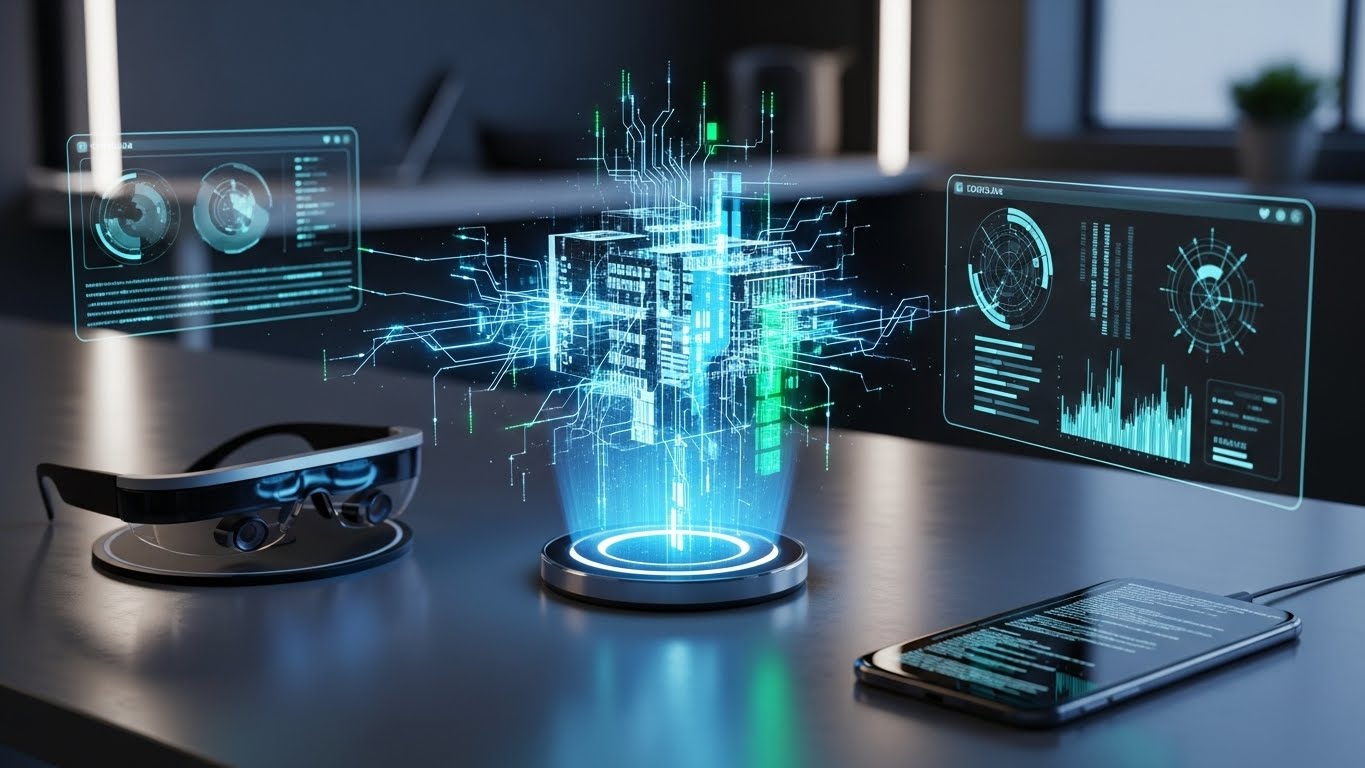
Technology has always been an integral part of human life, from the simplest tools of the early civilizations to the complex digital systems that dominate modern society. As we stand at the crossroads of innovation, the pace at which technology is evolving is both exhilarating and overwhelming. Every year, new advancements reshape industries, create new possibilities, and change the way we interact with the world. In this post, we will take a closer look at some of the most exciting trends that are shaping the future of technology.
Artificial Intelligence: The Brain of Tomorrow
Artificial intelligence (AI) is perhaps the most discussed and rapidly advancing field in technology today. From self-driving cars to personalized recommendations on streaming services, AI is already making a significant impact on our daily lives. But what does the future hold for AI?
In the coming years, AI will become increasingly sophisticated, able to perform tasks that were once thought to be reserved for humans. The future of AI is not limited to automation of repetitive tasks; it’s about creating intelligent systems that can learn, adapt, and even think creatively. Imagine AI-powered personal assistants that can understand your mood and needs and help you make decisions, or AI systems that can predict health problems before they occur.
Machine learning, a subset of AI, will also see tremendous growth. With the ability to process vast amounts of data and identify patterns, machine learning will revolutionize sectors like healthcare, finance, and education. In healthcare, AI can help doctors diagnose diseases more accurately by analyzing medical data and images. In finance, it can optimize investment strategies by analyzing market trends in real-time. The potential applications are limitless.
Quantum Computing: Unlocking the Power of the Quantum World
Quantum computing is another area of technology that promises to revolutionize industries. While classical computers process information in binary form (using ones and zeros), quantum computers use quantum bits or “qubits,” which can exist in multiple states at once. This ability allows quantum computers to process information at speeds far beyond the capabilities of traditional computers.
Though quantum computing is still in its infancy, its potential is immense. It could solve problems that are currently beyond the reach of even the most powerful supercomputers. For example, quantum computers could be used to model complex molecular structures, speeding up the development of new drugs and materials. They could also optimize supply chains, enhance cryptography, and help tackle complex global challenges like climate change.
However, building a functional quantum computer is no small feat. There are still significant technical challenges to overcome, including stabilizing qubits and reducing errors in quantum calculations. But the progress made so far is promising, and quantum computing could be a game-changer in the next decade.
Blockchain Technology: Redefining Trust and Transparency
Blockchain technology is often associated with cryptocurrencies like Bitcoin, but its potential goes far beyond digital currencies. At its core, blockchain is a decentralized ledger that records transactions across multiple computers in a way that makes it nearly impossible to alter the records. This feature makes it a powerful tool for improving transparency, security, and trust in various industries.
One of the most exciting potential applications of blockchain is in supply chain management. By using blockchain to track the movement of goods from the manufacturer to the consumer, companies can provide real-time information about the origin, quality, and authenticity of products. This can help combat issues like counterfeiting, fraud, and human rights abuses in supply chains.
Blockchain can also transform industries like finance, real estate, and healthcare. In finance, it can enable faster, cheaper, and more secure transactions, while in real estate, it could streamline property transactions and reduce fraud. In healthcare, blockchain can be used to securely store and share patient records, ensuring that they are accessible only to authorized individuals.
The Internet of Things (IoT): Connecting Everything
The Internet of Things (IoT) refers to the network of interconnected devices that can communicate and share data with each other. These devices range from smart home appliances to wearable fitness trackers and industrial machinery. By connecting everyday objects to the internet, IoT has the potential to revolutionize how we interact with the world around us.
In the near future, IoT will play an increasingly important role in making cities smarter. From traffic lights that adjust in real-time to reduce congestion to smart grids that optimize energy usage, IoT will help create more efficient, sustainable urban environments. In the home, IoT will enable greater convenience and energy savings through smart thermostats, lighting, and appliances that can be controlled remotely.
In healthcare, IoT will enable continuous monitoring of patients’ vital signs, allowing doctors to intervene before a problem becomes critical. In agriculture, IoT sensors can monitor soil conditions and weather patterns, enabling farmers to optimize irrigation and reduce water waste. The possibilities are endless, and as IoT devices become more affordable and widespread, we will see these technologies become an integral part of our daily lives.
5G and Beyond: The Next Era of Connectivity
The rollout of 5G networks is already underway, promising faster, more reliable internet connections that will unlock new possibilities for everything from gaming to healthcare. But 5G is just the beginning. As we look to the future, the next generation of wireless technology, 6G, is already being discussed.
5G networks offer faster download speeds, lower latency, and the ability to support a massive number of connected devices. This will enable innovations like augmented reality (AR) and virtual reality (VR) to reach their full potential, as these technologies require high-speed internet with minimal delays. Autonomous vehicles will also benefit from 5G, as they need constant communication with other vehicles and infrastructure to ensure safe operation.
Looking further ahead, 6G is expected to take connectivity to even greater heights. Researchers are exploring the use of terahertz waves, which could allow for internet speeds that are 100 times faster than 5G. This could enable the development of new technologies that are currently unimaginable, such as fully immersive holographic communication and real-time brain-computer interfaces.
Augmented Reality and Virtual Reality: Bridging the Digital and Physical Worlds
Augmented reality (AR) and virtual reality (VR) are two technologies that are already having a significant impact on entertainment, gaming, and education. However, their potential extends far beyond these fields.
AR and VR are poised to transform industries like healthcare, architecture, and retail. In healthcare, VR can be used for immersive medical training, allowing doctors to practice surgeries in a risk-free virtual environment. AR can help surgeons by overlaying real-time data on the patient during surgery, improving precision and outcomes.
In architecture, VR can allow clients to walk through virtual representations of buildings before construction even begins, helping them visualize and make changes to designs. In retail, AR can enhance the shopping experience by allowing customers to try on clothes or see how furniture would look in their homes before making a purchase.
As the technology behind AR and VR continues to improve, we can expect these experiences to become more seamless and realistic, blurring the lines between the physical and digital worlds.
Sustainable Technology: Innovation for a Greener Future
As the world faces mounting environmental challenges, there is a growing emphasis on developing technologies that are not only innovative but also sustainable. The future of technology is intrinsically linked to the future of the planet, and many of the innovations we are seeing today are aimed at reducing our carbon footprint and conserving natural resources.
Renewable energy technologies, such as solar and wind power, are rapidly advancing, with new materials and systems making these energy sources more efficient and affordable. In addition, energy storage technologies, such as advanced batteries, are improving, allowing us to store energy more effectively and reduce reliance on fossil fuels.
In the world of transportation, electric vehicles (EVs) are becoming increasingly popular, with major automakers investing heavily in EV development. Furthermore, innovations in sustainable farming, water management, and waste disposal are helping reduce the environmental impact of traditional industries.
Conclusion: Embracing the Future of Technology
As we look toward the future, it’s clear that technology will continue to evolve at an unprecedented pace. From AI and quantum computing to blockchain and IoT, the possibilities are boundless. The challenges that come with these advancements are also significant, but with the right mindset and approach, we can harness these technologies to improve lives, enhance industries, and solve some of the most pressing issues of our time.
The future of technology is not just about creating smarter devices or faster networks—it’s about creating a better, more sustainable world. As we continue to push the boundaries of what’s possible, we must also ensure that we are using these innovations responsibly, ethically, and for the greater good. The next decade promises to be one of incredible transformation, and the question remains: How will we shape it?