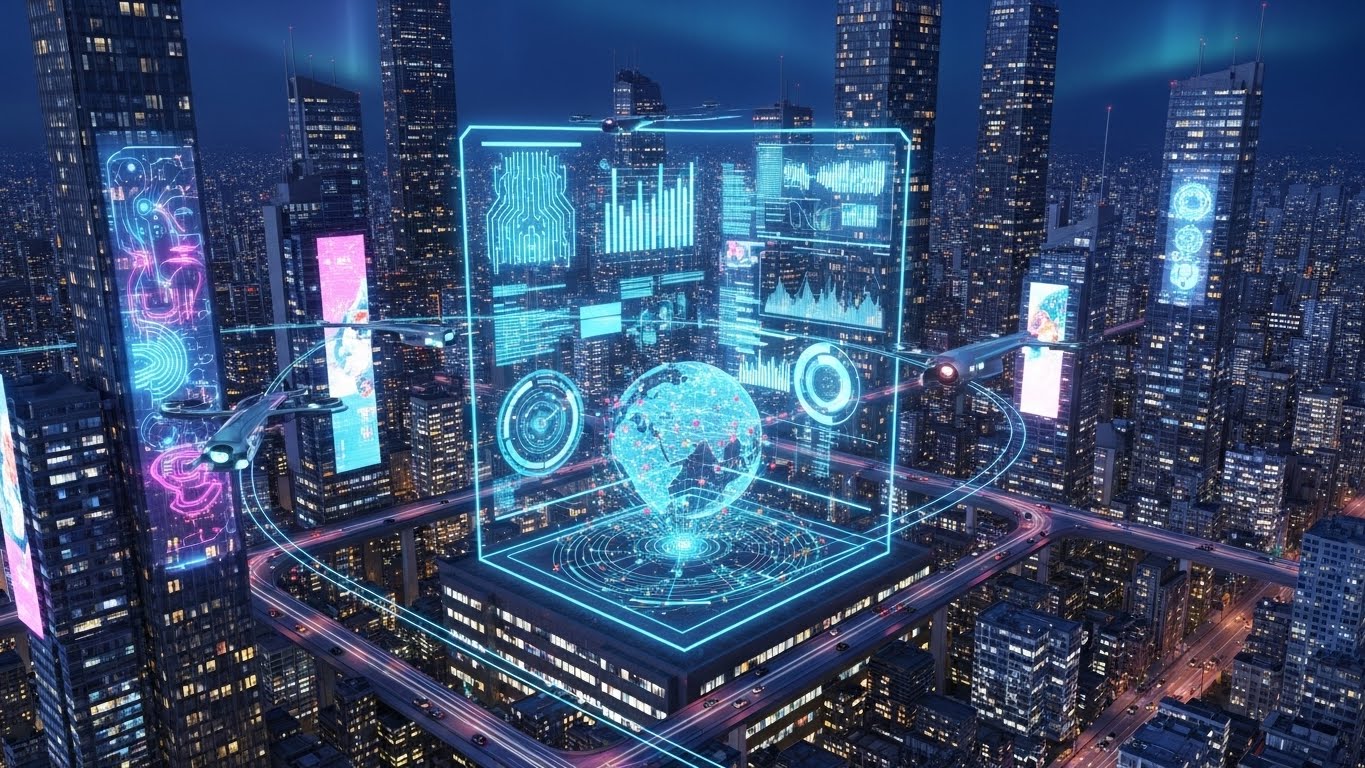





Technology has always been a driving force behind the evolution of human civilization, from the first tools used by early humans to the complex systems that govern our modern lives. Today, we find ourselves standing at the threshold of a new technological age—one that promises to fundamentally alter how we interact with the world, each other, and even ourselves. With each passing day, new breakthroughs emerge, pushing the boundaries of what we once thought possible. In this blog post, we will explore the most exciting technological advancements that are currently shaping our future, from artificial intelligence to quantum computing, and consider their potential to revolutionize industries, enhance our daily lives, and challenge our ethical boundaries.
The Dawn of Artificial Intelligence
Artificial intelligence (AI) is no longer a futuristic concept confined to science fiction novels; it is here, and it is changing the world as we know it. AI is revolutionizing industries across the board, from healthcare and finance to entertainment and transportation. The ability of machines to learn, adapt, and make decisions based on data is opening new possibilities for automation, decision-making, and efficiency.
In healthcare, AI is already being used to diagnose diseases, analyze medical images, and even assist in drug discovery. Machine learning algorithms are able to process vast amounts of data and identify patterns that may be invisible to the human eye. For example, AI-powered tools are now capable of detecting early-stage cancers with remarkable accuracy, enabling doctors to catch diseases before they spread. Similarly, AI is helping to streamline the drug development process, drastically reducing the time and cost associated with discovering new treatments.
In the realm of transportation, AI is at the heart of the autonomous vehicle revolution. Self-driving cars are already being tested on roads around the world, with companies like Tesla, Waymo, and Uber leading the charge. These vehicles use AI algorithms to process data from sensors and cameras, allowing them to navigate and make real-time decisions without human intervention. While fully autonomous cars are still a few years away from being widespread, the progress made so far is impressive, and the potential for reducing traffic accidents, improving efficiency, and reshaping urban landscapes is vast.
AI is also having a profound impact on the world of entertainment, with platforms like Netflix and Spotify using machine learning to recommend movies, TV shows, and music based on user preferences. In the gaming industry, AI is being used to create more realistic and dynamic non-playable characters (NPCs), enhancing the overall gaming experience. Moreover, AI is even being harnessed to create art, with algorithms generating everything from music and paintings to poems and short stories.
However, the rapid rise of AI raises significant ethical concerns. As AI systems become more autonomous, questions about accountability, bias, and job displacement become increasingly important. For example, how can we ensure that AI algorithms are free from bias, especially in critical areas like hiring, criminal justice, and lending? And what happens when machines are given the power to make life-or-death decisions, such as in autonomous vehicles or military drones? As AI continues to evolve, it is essential that we address these ethical challenges to ensure that the benefits of AI are shared equitably and responsibly.
The Promise of Quantum Computing
Quantum computing is another frontier that promises to revolutionize technology as we know it. Unlike classical computers, which process information in binary form (1s and 0s), quantum computers leverage the principles of quantum mechanics to process information in a fundamentally different way. Quantum computers use quantum bits, or qubits, which can represent multiple states simultaneously through a phenomenon known as superposition. This ability to exist in multiple states at once allows quantum computers to perform certain types of calculations exponentially faster than classical computers.
The potential applications of quantum computing are vast and transformative. In fields such as cryptography, quantum computers could break existing encryption methods, leading to new, more secure systems for protecting sensitive data. In medicine, quantum computing could be used to simulate complex molecular interactions, enabling the development of new drugs and therapies. Similarly, quantum computers could revolutionize industries like logistics, finance, and artificial intelligence by solving problems that are currently too complex for classical computers to tackle.
Despite the promise of quantum computing, there are still significant hurdles to overcome before these machines become widely accessible. Building and maintaining a quantum computer is an incredibly complex task, and current quantum computers are prone to errors and instability. Researchers are working to improve the reliability and scalability of quantum systems, but it will likely be several years before quantum computing reaches its full potential.
Nonetheless, the advancements in quantum computing are a testament to the incredible pace of technological progress. As we move forward, quantum computing has the potential to unlock new capabilities that could transform entire industries and drive innovation in ways we can’t yet fully imagine.
The Rise of the Internet of Things (IoT)
The Internet of Things (IoT) is another area of technology that is rapidly transforming the way we live and work. At its core, IoT refers to the network of physical devices that are connected to the internet and capable of collecting and sharing data. These devices range from everyday objects like refrigerators and thermostats to more advanced systems like industrial machinery and healthcare equipment.
One of the most significant impacts of IoT is the creation of smart homes. Devices like smart thermostats, security cameras, lighting systems, and voice assistants are making it easier than ever to control and monitor our living spaces. Smart devices can learn our preferences over time, adjusting the temperature, lighting, and even the music to create an environment that is perfectly suited to our needs. For example, a smart thermostat can automatically adjust the temperature in your home based on your schedule, helping to reduce energy consumption and lower utility bills.
IoT is also transforming industries like agriculture, where connected sensors are being used to monitor soil conditions, weather patterns, and crop health. In the healthcare industry, IoT devices such as wearable fitness trackers and remote monitoring tools are enabling individuals to track their health in real-time, while also providing healthcare providers with valuable data to improve patient care. Similarly, in the manufacturing sector, IoT is helping to optimize supply chains, monitor equipment performance, and improve operational efficiency.
However, the proliferation of IoT devices raises important concerns about data privacy and security. With billions of devices collecting and sharing data, there is an increased risk of cyberattacks and data breaches. Additionally, as IoT devices become more integrated into our daily lives, the amount of personal data being collected is growing exponentially. Ensuring that this data is stored securely and used responsibly will be critical to the future success of IoT technology.
The Evolution of Augmented and Virtual Reality
Augmented reality (AR) and virtual reality (VR) are technologies that have captured the public’s imagination in recent years, offering new ways to experience the world and interact with digital content. While VR immerses users in fully virtual environments, AR enhances the real world by overlaying digital information on top of it.
In entertainment, both AR and VR are transforming the way we play games, watch movies, and experience live events. VR gaming has become a popular trend, with platforms like Oculus Rift and PlayStation VR offering immersive gaming experiences that transport players into entirely new worlds. Meanwhile, AR games like Pokémon Go have introduced a new way to interact with the physical world, merging real-life exploration with digital gameplay.
Beyond entertainment, AR and VR are making waves in industries like education, healthcare, and architecture. VR is being used in medical training, allowing students to practice surgeries and medical procedures in a safe, virtual environment. AR is being used to assist surgeons in real-time, providing them with digital overlays that highlight key areas of the body or offer additional guidance during procedures. Similarly, in architecture, AR is being used to visualize building designs in real-world spaces, enabling architects and clients to see how designs will look in their actual locations before construction begins.
While the potential for AR and VR is vast, there are still significant challenges to overcome. VR, in particular, can be expensive, with high-end headsets and powerful computers required to run the most immersive experiences. Additionally, some users experience motion sickness or discomfort while using VR, which can limit its widespread adoption. As the technology continues to evolve, we can expect these issues to be addressed, making AR and VR more accessible and enjoyable for a wider audience.
Conclusion: The Road Ahead
The future of technology is exciting, filled with endless possibilities and opportunities for innovation. From AI and quantum computing to IoT and AR/VR, the technological advancements we are witnessing today are shaping the world of tomorrow. However, with great power comes great responsibility. As we continue to push the boundaries of what is possible, it is essential that we consider the ethical, social, and environmental implications of these technologies.
The challenge will be to harness the potential of these innovations while ensuring that they are used for the benefit of all. By addressing issues like data privacy, security, and job displacement, we can create a future where technology enhances our lives, drives economic growth, and helps solve some of the world’s most pressing problems. As we look to the future, it is clear that technology will continue to be a powerful force for change, shaping not just our industries but the very fabric of society itself.