



Introduction
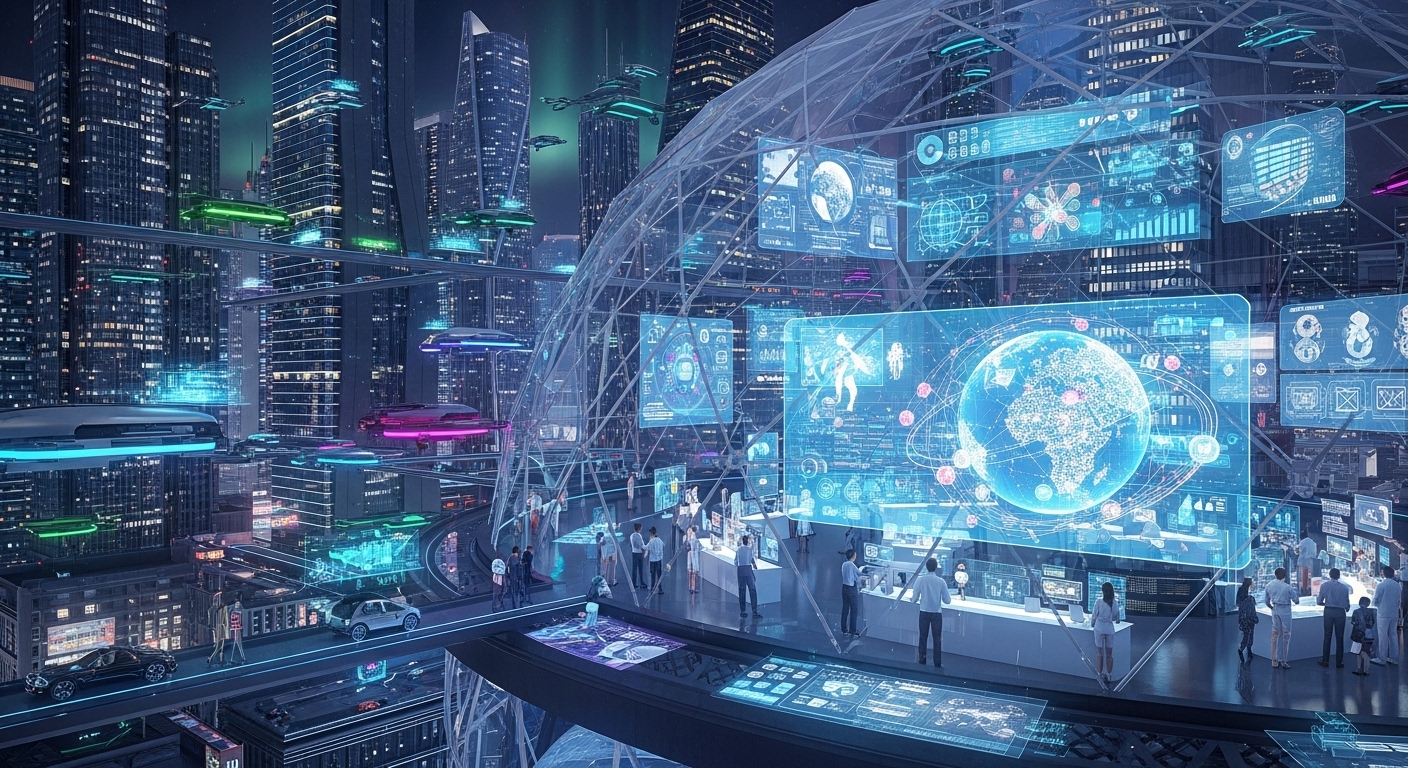
Technology has always been at the heart of human progress. From the discovery of fire to the invention of the internet, every era in human history has been defined by its technological milestones. In the 21st century, technology has advanced at a pace faster than any time before. It has transformed how we live, communicate, learn, work, and even think. The gadgets and systems we rely on today would have seemed like science fiction just a few decades ago.
This blog explores the vast landscape of modern technology — its evolution, major breakthroughs, and the ways it continues to shape the world around us. From artificial intelligence and robotics to renewable energy and biotechnology, we will dive deep into how these innovations are driving humanity forward while also examining the challenges they bring.
The Digital Revolution: A Turning Point in History
The digital revolution, which began in the late 20th century, marked a monumental shift in how humans store, process, and share information. The transition from analog to digital technologies completely redefined communication, entertainment, business, and education.
Before digitalization, information was confined to paper, film, and magnetic tapes. The arrival of personal computers and the internet changed everything. Suddenly, data could be stored electronically, transmitted globally within seconds, and accessed by anyone with a connection.
The introduction of the World Wide Web in the early 1990s democratized access to information. It allowed individuals, companies, and governments to communicate on an unprecedented scale. By the 2000s, the internet had become an integral part of daily life — not just a tool for professionals or academics. Email replaced letters, search engines replaced encyclopedias, and online shopping transformed global commerce.
Digital technology laid the groundwork for the innovations that followed — cloud computing, mobile applications, artificial intelligence, and beyond. Every major leap in today’s world can trace its roots back to the digital revolution.
The Rise of Artificial Intelligence
Artificial Intelligence (AI) has emerged as one of the defining technologies of the 21st century. It represents the ability of machines to perform tasks that typically require human intelligence — such as reasoning, learning, perception, and decision-making.
AI is not a single technology but rather a collection of methods and systems designed to analyze data, recognize patterns, and make autonomous decisions. Machine learning, a subset of AI, enables computers to learn from experience rather than explicit programming. Neural networks, inspired by the human brain, process complex data and enable everything from image recognition to natural language processing.
In everyday life, AI powers recommendation systems on streaming platforms, assists in medical diagnosis, automates financial trading, and enhances cybersecurity. Virtual assistants and chatbots have become common in homes and businesses, providing instant support and information.
AI’s potential, however, goes far beyond convenience. In industries like healthcare, it’s helping predict diseases earlier and personalize treatments. In agriculture, AI systems optimize crop yields and resource use. In manufacturing, they improve quality control and reduce waste.
Yet, the rise of AI also brings ethical and economic questions. Concerns about job displacement, data privacy, and algorithmic bias have become global debates. Balancing innovation with accountability is now a critical challenge for governments and corporations alike.
The Internet of Things: A Connected World
The Internet of Things (IoT) refers to the vast network of physical devices connected to the internet, collecting and sharing data in real time. These devices — from smart thermostats to industrial sensors — communicate seamlessly, creating an interconnected ecosystem that bridges the physical and digital worlds.
In homes, IoT has led to the creation of “smart homes,” where lights, appliances, and security systems can be controlled remotely through smartphones or voice commands. In cities, IoT forms the foundation of “smart cities,” where traffic lights adjust dynamically, waste systems optimize routes, and energy grids balance consumption.
In industries, IoT enables predictive maintenance, where machines alert engineers before breakdowns occur. In healthcare, wearable devices track heart rate, sleep patterns, and physical activity, allowing doctors to monitor patients remotely.
The amount of data generated by IoT devices is staggering, and managing this data securely has become a major focus. As IoT expands, cybersecurity, data management, and interoperability among devices are key challenges that must be addressed to ensure trust and safety.
Cloud Computing: The Backbone of the Digital Age
Cloud computing has redefined how organizations store, access, and process data. Instead of maintaining physical servers, businesses and individuals now rely on cloud platforms to provide scalable computing resources over the internet.
The benefits of cloud technology are immense: flexibility, cost efficiency, and global accessibility. It allows startups to scale operations without massive upfront infrastructure costs and enables collaboration across continents in real time.
Services like Infrastructure as a Service (IaaS), Platform as a Service (PaaS), and Software as a Service (SaaS) have become the foundation of modern business operations. Cloud-based tools power everything from project management and video conferencing to massive enterprise resource planning systems.
Beyond business, cloud computing supports innovation in fields like artificial intelligence, where vast datasets are stored and processed. It also underpins the entertainment industry, enabling on-demand streaming and online gaming for millions simultaneously.
As more critical data moves to the cloud, cybersecurity and data privacy have become essential priorities. Encryption, authentication, and compliance frameworks are continuously evolving to protect sensitive information.
Mobile Technology: Redefining Human Interaction
The introduction of smartphones changed the way people live and communicate more than any other single device in history. What began as a portable telephone has become a personal computing powerhouse capable of handling nearly every aspect of modern life.
Mobile technology brought the internet into everyone’s pocket. It turned communication into an instant, visual, and multimedia experience. Social media platforms flourished, transforming personal relationships, marketing, and global news dissemination.
Applications for navigation, banking, education, and entertainment have made smartphones indispensable. The mobile ecosystem also created a massive digital economy — from app stores and mobile payments to gig work and e-commerce.
Advances in 5G networks are taking mobile technology even further. With higher speed, lower latency, and the ability to connect billions of devices, 5G is enabling new innovations such as autonomous vehicles, remote surgeries, and immersive augmented reality experiences.
Robotics and Automation: The Future of Work
Automation has been part of industrial progress since the invention of the assembly line, but modern robotics takes it to a new level. Robots now perform complex tasks in manufacturing, healthcare, logistics, and even household chores.
In factories, robotic arms assemble products with precision and speed. In warehouses, autonomous robots navigate aisles, moving goods efficiently. In hospitals, surgical robots assist doctors in performing minimally invasive operations with unmatched accuracy.
The combination of robotics and AI is creating intelligent systems that learn from their environment and make decisions independently. This evolution is driving the development of self-driving vehicles, drone deliveries, and smart agricultural machinery.
While automation increases productivity and reduces errors, it also raises questions about employment and skills. The future workforce must adapt to collaborate with intelligent machines, focusing on creativity, problem-solving, and human interaction — areas where machines cannot easily replace humans.
Biotechnology: Engineering Life
Biotechnology represents one of the most powerful intersections of science and technology. By manipulating biological systems, scientists are creating innovations that improve health, agriculture, and the environment.
In medicine, biotechnology has led to breakthroughs in genetic engineering, regenerative therapies, and vaccine development. Techniques like CRISPR-Cas9 have made gene editing more precise and accessible, opening possibilities for curing inherited diseases.
In agriculture, genetically modified crops increase yield, resist pests, and reduce dependency on harmful chemicals. Biotechnology also plays a key role in sustainability, with the development of biofuels, biodegradable materials, and lab-grown meat.
Despite its promise, biotechnology poses ethical and ecological questions. The ability to alter life at the genetic level requires strict oversight to prevent misuse or unintended consequences. Balancing innovation with ethical responsibility is crucial as biotech continues to expand its reach.
Renewable Energy and Green Technology
As the effects of climate change become increasingly evident, technology is being leveraged to create a more sustainable future. Renewable energy sources like solar, wind, hydro, and geothermal power are replacing fossil fuels and reshaping global energy systems.
Technological advances have made renewable energy more affordable and efficient. Solar panels now convert sunlight into electricity with higher efficiency, while wind turbines generate power even in low-wind conditions. Energy storage systems, such as advanced batteries, address the issue of intermittency by storing surplus power for later use.
Smart grids and digital energy management systems optimize consumption and reduce waste. Electric vehicles, powered by clean energy, are transforming transportation and reducing carbon emissions.
Sustainability has become a driving force for innovation, pushing companies to adopt eco-friendly practices and materials. From green architecture to recycling technologies, the green revolution is as much a technological challenge as it is an environmental one.
Cybersecurity: Protecting the Digital Frontier
With greater connectivity comes greater risk. Cybersecurity has become a cornerstone of the digital world, protecting systems, data, and privacy from malicious attacks. As technology evolves, so do cyber threats — from ransomware and phishing to state-sponsored hacking and identity theft.
The increasing digitization of critical infrastructure, such as power grids and financial systems, means that cybersecurity is not just a technical issue but a matter of national security. Artificial intelligence and machine learning are now being used to detect and respond to cyber threats in real time.
For individuals, cybersecurity means protecting personal data through strong passwords, encryption, and awareness. For organizations, it requires comprehensive strategies that combine technology, policy, and education.
As the internet of things expands and more devices connect to global networks, the importance of cybersecurity will only grow. The digital frontier must remain secure to preserve trust and stability in the modern world.
The Role of Quantum Computing
Quantum computing represents the next frontier of computational power. Unlike classical computers, which process information in binary bits (0s and 1s), quantum computers use qubits that can exist in multiple states simultaneously. This allows them to solve complex problems that would take traditional computers centuries.
Quantum computing could revolutionize fields like cryptography, medicine, materials science, and artificial intelligence. For example, it could model molecular structures for new drug discovery, optimize logistics at a massive scale, or crack existing encryption methods.
Although quantum technology is still in its early stages, major advancements in hardware and algorithms suggest it could soon move from experimental labs to commercial applications. The potential impact is so vast that nations and corporations are investing heavily to lead in the quantum race.
The Human Side of Technology
While technology continues to advance at an astonishing rate, it’s essential to remember that it exists to serve humanity. The way people interact with technology shapes societies, cultures, and even personal identities.
Digital platforms have redefined communication but also introduced challenges like misinformation, digital addiction, and privacy erosion. Social media connects billions but can also amplify division. Artificial intelligence enhances decision-making but risks replacing human judgment in critical areas.
The challenge of the modern era is not just to innovate but to innovate responsibly. Technology should enhance human well-being, equality, and opportunity — not undermine them. Ethics, education, and inclusivity must guide every step of technological progress.
The Future Ahead
The next decades will likely bring even more rapid technological change. Advances in AI, robotics, quantum computing, and biotechnology will redefine industries and daily life. Space exploration, driven by both public and private sectors, may lead to permanent human presence on the Moon and Mars.
At the same time, the fusion of physical, digital, and biological technologies — often called the Fourth Industrial Revolution — will blur the boundaries between man and machine. Augmented reality, brain-computer interfaces, and genetic enhancements will challenge what it means to be human.
Preparing for this future requires not just innovation but wisdom. Education systems must evolve to teach adaptability, creativity, and critical thinking. Governments and businesses must collaborate to ensure technology benefits all of humanity, not just a privileged few.
Conclusion
Technology has become the driving force behind nearly every aspect of modern life. It has created incredible opportunities, from global communication and medical breakthroughs to sustainable energy and intelligent machines. Yet, with these opportunities come profound responsibilities.
The story of technology is not just about machines, codes, or algorithms. It’s about human curiosity, imagination, and the desire to improve the world. Every breakthrough — whether a smartphone or a satellite — begins with a simple question: How can we make life better?