




Technology is the driving force behind every major shift we’ve seen in the world over the past century. From the industrial revolution to the rise of the internet, each wave of innovation has reshaped industries, economies, and societies in profound ways. Today, we stand on the precipice of another technological leap, where advancements in artificial intelligence, quantum computing, and connectivity promise to transform every aspect of our lives. In this blog post, we’ll dive into the key tech trends that are shaping our future and what they could mean for us.
Artificial Intelligence: Revolutionizing Industries
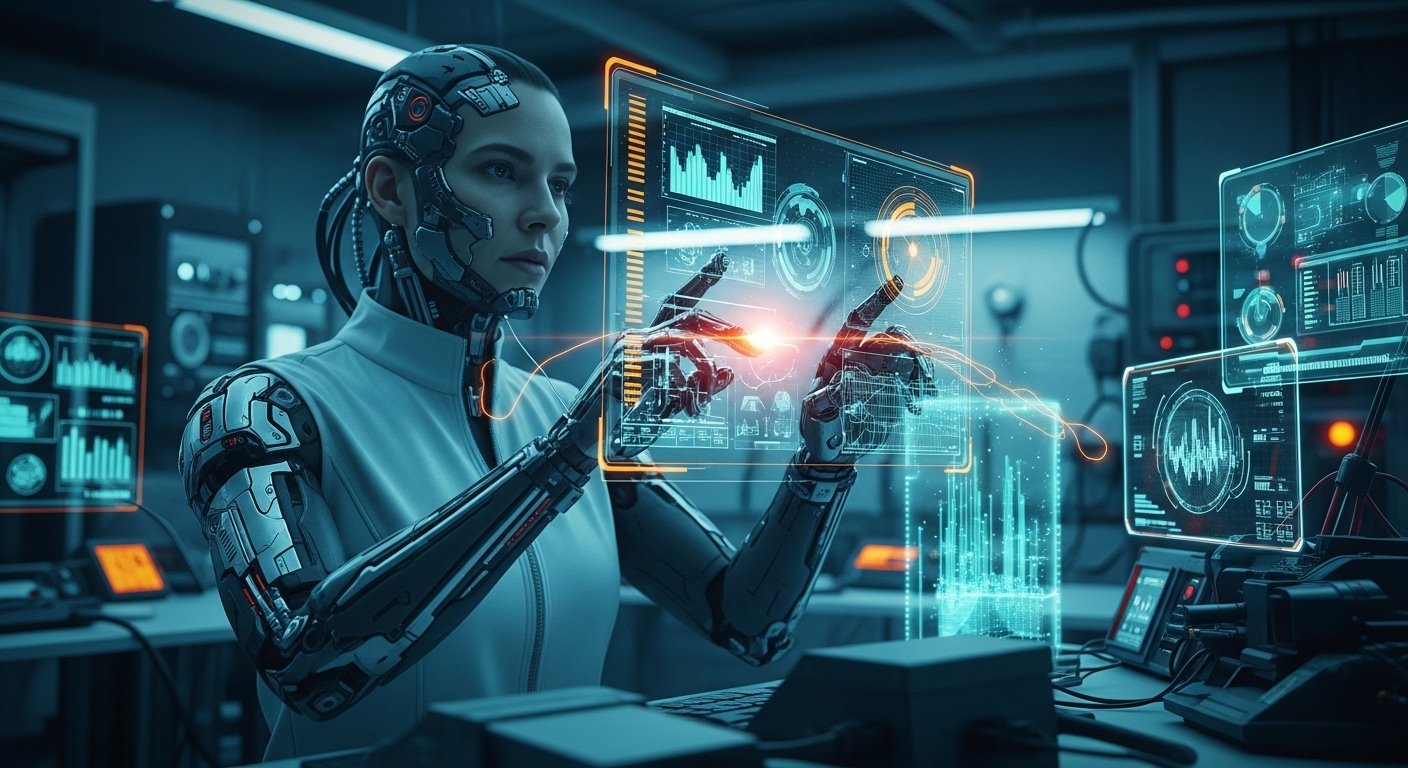
Artificial intelligence (AI) has come a long way since its inception. What was once a far-off idea has now become an integral part of daily life, from virtual assistants like Siri and Alexa to powerful machine learning algorithms that personalize our digital experiences. But AI’s potential goes far beyond simple automation; it is quickly transforming entire industries.
In healthcare, AI is enabling doctors to diagnose diseases with greater accuracy by analyzing medical images, detecting patterns in patient data, and predicting outcomes. In the automotive industry, AI powers self-driving technology, with the promise of reducing traffic accidents and improving transportation efficiency. AI is also playing a pivotal role in the financial sector, where it’s being used for everything from fraud detection to algorithmic trading.
Looking ahead, AI’s influence will only grow. With advancements in deep learning and neural networks, AI systems will become even more sophisticated, capable of handling tasks that were once thought to require human intelligence. This has the potential to drive productivity to new heights, but it also raises important questions about ethics, job displacement, and the future of work.
Quantum Computing: The Next Frontier of Computing Power
When we think of computing, we often envision traditional machines that use binary code (0s and 1s) to process information. However, quantum computing takes an entirely different approach, using quantum bits, or qubits, that can exist in multiple states simultaneously. This ability to process complex data in parallel opens up enormous possibilities for solving problems that are impossible for classical computers to handle.
In the future, quantum computers could revolutionize fields like cryptography, drug discovery, and materials science. For example, quantum computing could dramatically speed up the discovery of new drugs by simulating molecular interactions far faster than current methods. It could also crack encryption algorithms that are currently considered unbreakable, posing both opportunities and challenges for cybersecurity.
Although quantum computing is still in its infancy, the race to build scalable quantum computers is underway, with major players like Google, IBM, and Microsoft leading the charge. While there are significant hurdles to overcome, the potential of quantum computing to solve some of humanity’s biggest challenges makes it one of the most exciting areas of tech innovation.
5G Connectivity: Powering a Connected World
One of the most anticipated technological advancements in recent years is the rollout of 5G networks. Offering speeds up to 100 times faster than current 4G networks, 5G promises to transform the way we connect and communicate. But it’s not just about faster download speeds for smartphones—it’s about creating a foundation for the next wave of innovation.
5G will enable the widespread adoption of the Internet of Things (IoT), allowing billions of devices to connect seamlessly to the internet. This will lead to smarter homes, cities, and industries, where devices communicate with each other in real time to optimize efficiency, reduce energy consumption, and improve user experiences.
In healthcare, 5G will facilitate remote surgeries and real-time health monitoring, allowing doctors to treat patients anywhere in the world with minimal latency. In the automotive industry, 5G will power autonomous vehicles, enabling them to communicate with each other and the surrounding infrastructure to prevent accidents and improve traffic flow. The possibilities are endless, and the widespread adoption of 5G networks will unlock new business models and technologies that we can’t yet fully imagine.
Blockchain: Decentralizing Trust and Security
When most people think of blockchain, they immediately think of cryptocurrencies like Bitcoin. However, the true potential of blockchain extends far beyond digital currencies. At its core, blockchain is a decentralized ledger that records transactions in a transparent and immutable way, making it ideal for industries that require secure, tamper-proof records.
One of the most promising uses of blockchain is in supply chain management. By providing an immutable record of every transaction, blockchain ensures that products are sourced, transported, and delivered in an ethical and transparent way. In the financial industry, blockchain can streamline cross-border payments, reduce fraud, and eliminate the need for intermediaries like banks.
Beyond finance and logistics, blockchain has the potential to disrupt industries like healthcare, voting, and intellectual property. By enabling secure, transparent transactions and data sharing, blockchain technology could fundamentally change how we interact with one another in the digital world.
Wearable Tech: Bringing the Future to Our Fingertips
Wearable technology is no longer a novelty—it’s becoming a staple of modern life. From fitness trackers and smartwatches to health-monitoring clothing, wearable tech is rapidly evolving and integrating more deeply into our daily routines. These devices provide us with valuable insights into our health, activity levels, and overall well-being.
The next generation of wearable tech goes beyond basic fitness tracking. Devices are now capable of monitoring heart rate, sleep patterns, blood oxygen levels, and even detecting early signs of stress or illness. In the near future, wearables could become even more sophisticated, offering features like continuous glucose monitoring for people with diabetes or real-time ECG readings for heart health.
Wearables are also enhancing our ability to interact with the world around us. Augmented reality (AR) glasses are already being developed to overlay digital information on the real world, allowing us to access information without having to look at a screen. This could revolutionize industries like education, retail, and entertainment by making digital content more immersive and interactive.
The Future of Work: Automation, Remote Collaboration, and AI Integration
The way we work is undergoing a radical transformation, driven by automation, artificial intelligence, and remote collaboration tools. With the rise of AI and machine learning, many repetitive and manual tasks are being automated, allowing workers to focus on more creative and strategic work. This shift is likely to continue as AI becomes more sophisticated and capable of taking on a wider range of tasks.
The COVID-19 pandemic accelerated the adoption of remote work and online collaboration tools, and these trends are expected to persist in the future. With the help of cloud computing, video conferencing, and project management software, teams can now collaborate seamlessly from anywhere in the world. In the future, this shift could lead to a more flexible, distributed workforce, where people can work from any location and collaborate in real-time across borders and time zones.
However, the future of work also raises important questions about job displacement and the changing nature of employment. As automation continues to replace certain types of jobs, it will be crucial for governments, companies, and individuals to invest in reskilling and upskilling to ensure that workers are prepared for the jobs of the future.
Conclusion: Embracing the Possibilities of Tomorrow’s Tech
The rapid pace of technological innovation presents both opportunities and challenges. As we look toward the future, technologies like AI, quantum computing, 5G, blockchain, and wearable tech have the potential to revolutionize every aspect of our lives. While these advancements promise to improve efficiency, productivity, and quality of life, they also require careful consideration of their ethical implications, security risks, and potential societal impact.
As we navigate this new era of innovation, it will be essential to balance progress with responsibility. By embracing these emerging technologies and thinking critically about their implications, we can ensure that the future of tech benefits everyone, creating a more connected, efficient, and equitable world for generations to come.