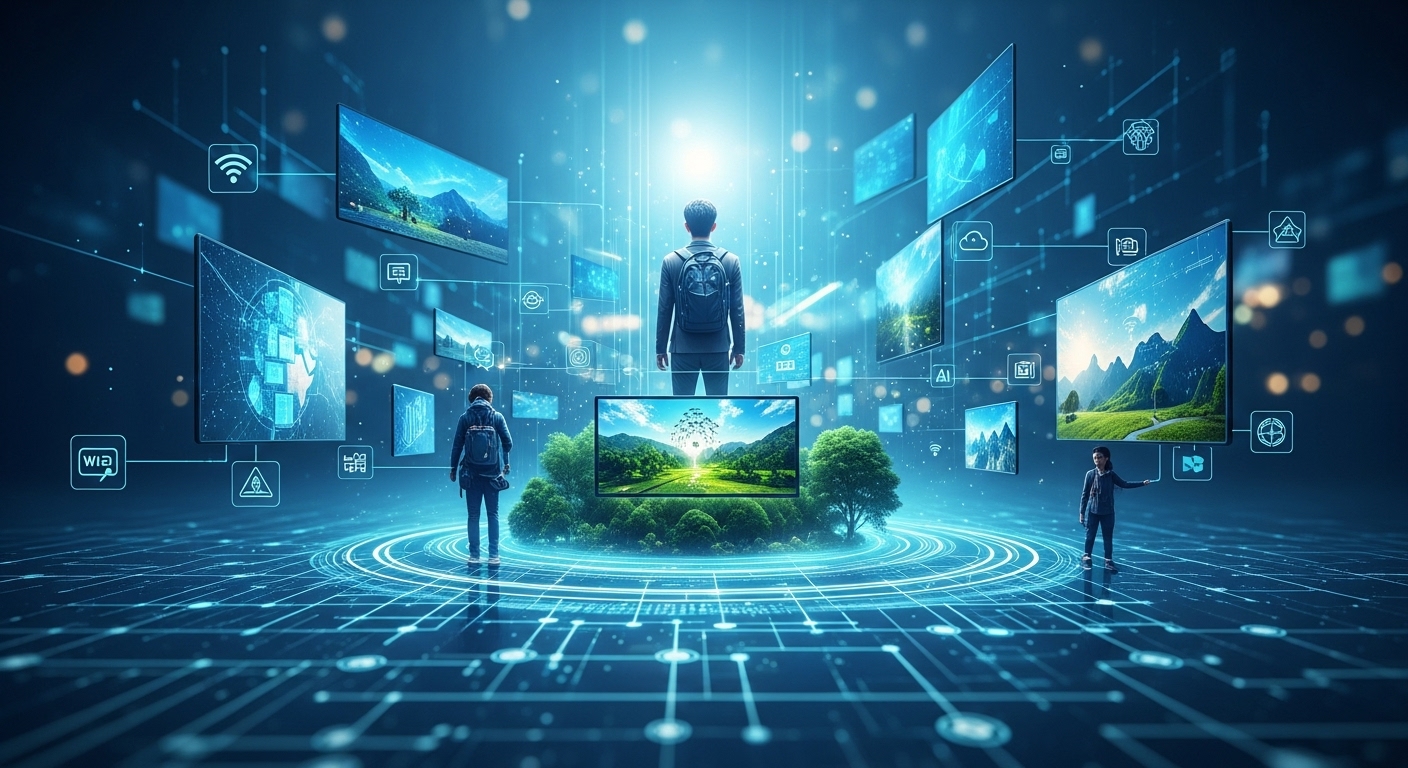





In the 21st century, technology is no longer just a tool; it has become the backbone of our existence, touching every part of our lives. From how we communicate to how we work, learn, and entertain ourselves, technology is ever-present. But with the rapid pace of innovation, we are left to wonder: what does the future hold? In this post, we’ll dive into the transformative forces of technology and how they’re shaping the world we live in.
The Rise of Artificial Intelligence: A New Era of Possibility
Artificial Intelligence (AI) is one of the most talked-about technologies today, and for good reason. AI has made significant strides in recent years, moving from a theoretical concept to a functional part of our daily lives. It’s already being used in areas like healthcare, finance, and transportation to improve efficiency, personalize experiences, and even predict outcomes.
For instance, AI-powered algorithms are revolutionizing medical diagnostics, enabling doctors to detect diseases earlier than ever. In the business world, AI is helping companies predict consumer behavior and personalize marketing efforts. But with all this promise, there are also concerns—ethics, privacy, and the impact on jobs are important issues we must consider as AI becomes more integrated into society.
The Internet of Things: Connecting the World Like Never Before
The Internet of Things (IoT) is a concept that’s changing the way we interact with the world around us. IoT refers to a network of devices—ranging from smart home appliances to industrial machines—connected to the internet, allowing them to send and receive data. These devices collect information, analyze it, and even make decisions based on that data.
In everyday life, IoT is making homes smarter. Your refrigerator might tell you when you’re out of milk, or your thermostat may learn your preferred temperature settings. In industries, IoT is streamlining processes, improving efficiency, and reducing costs by enabling real-time monitoring and predictive maintenance. As more devices get connected, however, the need for robust cybersecurity systems becomes critical to protect against data breaches.
Blockchain Technology: Revolutionizing Security and Trust
Blockchain is another technology that has moved beyond its original association with cryptocurrencies like Bitcoin. It’s a decentralized digital ledger that securely records transactions across multiple computers, making it nearly impossible to alter or hack the system. The transparency and security offered by blockchain are creating opportunities in various industries.
In supply chain management, for example, blockchain allows for better tracking of products from origin to delivery, improving transparency and reducing fraud. Blockchain also has the potential to revolutionize industries like healthcare by enabling secure sharing of patient data. As blockchain technology continues to evolve, it could transform many sectors by providing a more secure and transparent way to conduct transactions.
5G: The Future of Connectivity
The rollout of 5G technology is one of the most anticipated developments in the tech world. With faster speeds, lower latency, and the ability to connect more devices, 5G will unlock new possibilities in areas like autonomous vehicles, remote healthcare, and smart cities. The faster internet speeds will enable seamless streaming, real-time communication, and more immersive experiences in virtual and augmented reality.
However, as 5G expands, there will be challenges related to infrastructure, security, and regulation. Building out the 5G network requires significant investment, and ensuring that the technology is secure from cyber threats will be crucial. Despite these hurdles, 5G promises to accelerate innovation and make the digital world faster and more interconnected than ever.
Sustainability and Technology: A Green Revolution
As climate change becomes an increasingly urgent global issue, technology is stepping up to offer solutions. Renewable energy technologies like solar and wind power, electric vehicles, and smart grids are helping reduce our reliance on fossil fuels. Innovations in energy storage and efficiency are also contributing to a greener future.
AI and big data are playing a significant role in sustainability by optimizing resource use, monitoring environmental changes, and helping businesses reduce their carbon footprints. Green technologies are also addressing waste management through innovations like biodegradable materials and waste-to-energy systems. As we continue to develop and adopt these technologies, they will play a pivotal role in creating a more sustainable and eco-friendly world.
The Impact of Technology on Education
Education is undergoing a digital transformation, with technology at its core. Online learning platforms, virtual classrooms, and educational apps have made learning more accessible and personalized. Students can now learn at their own pace, accessing resources from anywhere in the world.
Moreover, technologies like virtual reality (VR) and augmented reality (AR) are offering immersive learning experiences that were previously unimaginable. Whether it’s students taking virtual field trips or doctors using VR to practice surgeries, these technologies are making education more interactive and engaging. However, ensuring equal access to these educational tools remains a key challenge.
Virtual Reality and Augmented Reality: Redefining Entertainment and Work
Virtual Reality (VR) and Augmented Reality (AR) are changing how we experience entertainment, communication, and even work. VR immerses users in entirely digital environments, while AR overlays digital content onto the real world. Together, these technologies are blurring the line between the physical and digital worlds.
In entertainment, VR offers an immersive experience in gaming, where players can step into different worlds and interact with them. In work, AR is improving collaboration by allowing teams to share virtual spaces, even when they’re miles apart. These technologies are also transforming industries like healthcare, where VR is used in medical training and AR assists in surgeries. As these technologies continue to improve, their applications will expand even further, offering new ways to work, learn, and play.
The Future of Tech: What Lies Ahead?
Looking ahead, the future of technology is filled with possibilities. From advancements in AI and robotics to innovations in space exploration and quantum computing, the potential for new discoveries is vast. However, with every breakthrough, we must address the ethical, social, and environmental implications that come with it.
The next phase of technological development will likely see even greater integration of machines and humans. From AI-driven decision-making to augmented reality interfaces, our daily lives will become more intertwined with digital systems. The key to ensuring that technology benefits humanity lies in responsible innovation, collaboration, and inclusivity.
Conclusion: Embracing Change in the Digital Age
Technology is transforming our world at an unprecedented rate. From the rise of AI to the connectivity of IoT, the digital landscape is evolving rapidly, offering both challenges and opportunities. As we navigate this digital age, embracing technology will be crucial to solving the world’s most pressing issues, from climate change to education and healthcare.
The future of tech is bright, and it’s up to us to ensure that it serves the greater good. By fostering innovation, prioritizing sustainability, and addressing the ethical questions that arise, we can build a future where technology enhances the human experience and leads to a more connected, efficient, and equitable world.