



Technology is the heartbeat of human progress. From the earliest stone tools to artificial intelligence, every leap in technological innovation has reshaped how we live, work, and think. The story of technology is not merely one of gadgets and machines; it’s a chronicle of human ambition, creativity, and adaptability. Each era in history has brought its own technological revolutions, transforming societies and redefining what it means to be human in an increasingly digital world.
In this blog, we will explore the journey of technology from its primitive beginnings to the cutting-edge developments of today. We’ll dive into how innovation impacts communication, education, medicine, transportation, and the environment, and we’ll also take a peek into what the future might hold.
The Dawn of Technology: Humanity’s First Inventions
Technology began not in laboratories or factories but in caves and open plains. The earliest humans discovered that tools could extend their capabilities. Stones sharpened into blades, sticks fashioned into spears, and fire harnessed for warmth and cooking marked the true beginning of technological thinking.
The invention of the wheel around 3500 BCE revolutionized transport and trade. The development of agriculture, around the same period, transformed human settlements. Communities could now stay in one place, leading to the creation of villages and, eventually, civilizations.
These early technologies were simple but monumental. They established the pattern of technological progress: identifying a problem, finding a creative solution, and using that solution to enhance survival and efficiency.
The Age of Discovery and Mechanical Ingenuity
Fast-forward to ancient civilizations like Egypt, Greece, China, and Rome, where innovation became more systematic. The Egyptians engineered pyramids that still baffle modern architects. The Greeks made strides in geometry, astronomy, and mechanical devices, while the Chinese invented paper, gunpowder, and the compass—technologies that shaped global history.
By the Middle Ages and the Renaissance, mechanical ingenuity flourished. Leonardo da Vinci’s designs for flying machines and early robotics showed that imagination could transcend practical limits. The invention of the printing press by Johannes Gutenberg in the 15th century democratized knowledge. For the first time, information could spread beyond the confines of royalty and religion, paving the way for education and scientific advancement.
The Industrial Revolution: Birth of Modern Technology
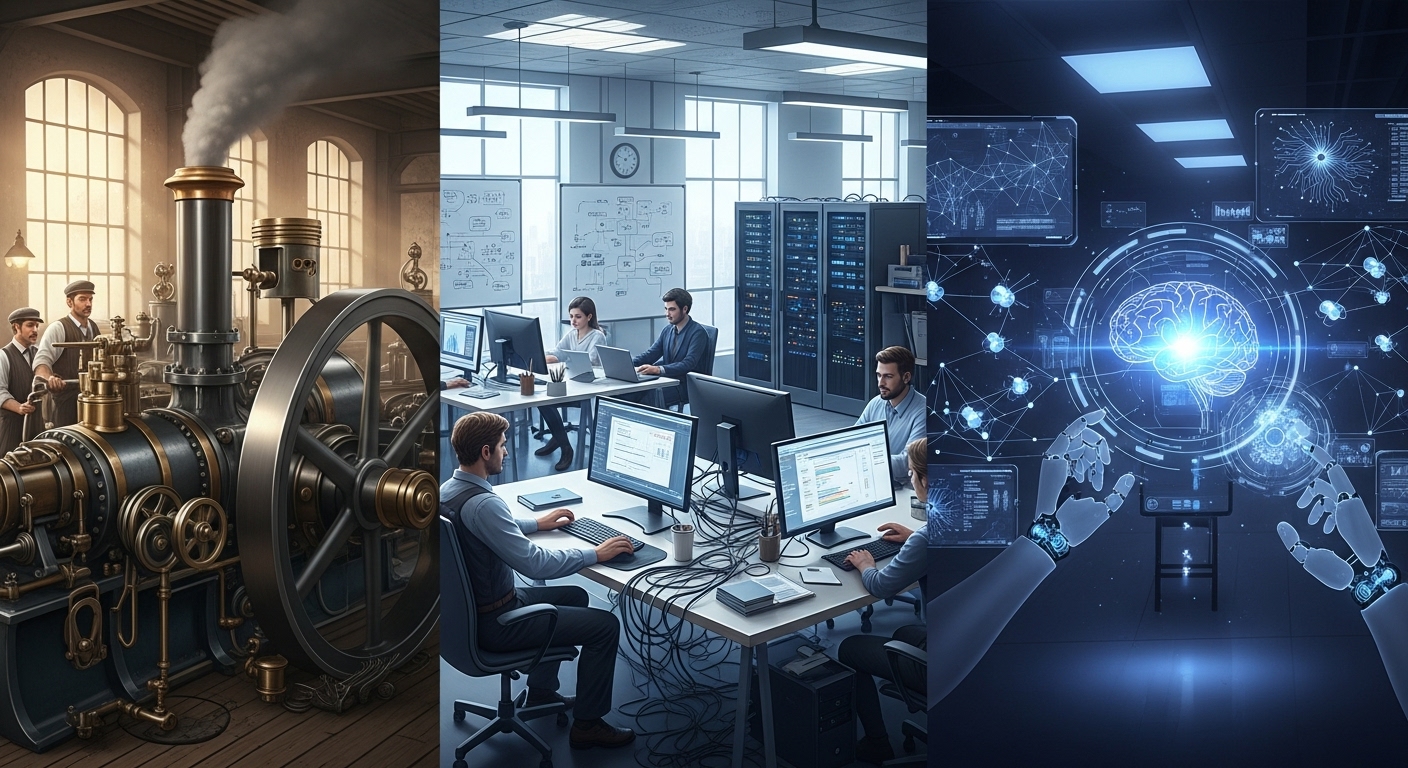
The late 18th century marked a turning point in human history. The Industrial Revolution transformed economies from agriculture-based to machine-based systems. Steam engines powered factories, trains, and ships, creating the first wave of mass production and global trade.
Textile mills, ironworks, and mechanical looms not only increased productivity but also changed the nature of labor. Urbanization followed as people moved from farms to factories in search of work. Although this period saw harsh working conditions, it also sowed the seeds of modern capitalism and industrial society.
One of the defining figures of this era was James Watt, whose improvements to the steam engine enabled it to become the backbone of industrial machinery. Later, inventors like Thomas Edison and Nikola Tesla pioneered the use of electricity, ushering in a new era of technological power.
The 20th Century: The Explosion of Innovation
The 20th century witnessed more technological progress than all previous centuries combined. Every decade brought new inventions that redefined daily life. The century began with automobiles and airplanes, continued through the rise of radio and television, and culminated in the digital revolution.
The Automobile and the Airplane
Henry Ford’s introduction of the assembly line in automobile production made cars affordable for the masses. What was once a luxury for the wealthy became a necessity for ordinary people. Simultaneously, the Wright brothers’ first successful flight in 1903 opened the skies to human exploration.
These inventions changed how people experienced distance. Travel became faster, more efficient, and more interconnected, shrinking the world both physically and culturally.
The Age of Electricity and Communication
Electricity became the driving force behind modern living. Light bulbs illuminated homes, while refrigerators, washing machines, and radios transformed domestic life. Communication leaped forward with the invention of the telephone by Alexander Graham Bell and later, the development of television.
The ability to transmit voices and images across great distances fundamentally changed society. News, entertainment, and education became accessible to millions, fostering a sense of global connection.
The Rise of Computing
The invention of the computer redefined technology’s purpose. Initially developed for complex calculations during World War II, computers evolved into indispensable tools for businesses, governments, and individuals. Early machines like ENIAC and UNIVAC paved the way for the personal computer revolution of the 1970s and 1980s.
Visionaries such as Steve Jobs and Bill Gates foresaw the potential of personal computing. The development of operating systems and user-friendly interfaces turned computers from specialized machines into household necessities. The spread of the internet in the 1990s completed the digital revolution, linking humanity in an information network unlike anything before it.
The Digital Age: Connecting the World
The 21st century ushered in the era of connectivity. Technology evolved from static tools to dynamic ecosystems that permeate every aspect of human life.
The Internet and the Rise of Social Media
The internet transformed how people communicate, learn, and conduct business. Email replaced letters, search engines replaced libraries, and social media redefined relationships. Platforms that allowed instant sharing of ideas, news, and experiences blurred the line between the personal and the global.
Social media has created unprecedented opportunities for connection, activism, and entrepreneurship. However, it also raised concerns about privacy, misinformation, and digital addiction. The double-edged nature of technology became increasingly evident as society grappled with balancing innovation and well-being.
Smartphones and the Age of Mobility
The invention of the smartphone combined the power of computing with the convenience of portability. With a single device, users could make calls, browse the internet, take photos, and manage finances. The smartphone became an extension of the human hand—an essential tool for modern existence.
App ecosystems further expanded this digital universe. From navigation to shopping, entertainment to education, the mobile revolution made technology personal and immediate.
Technology in Medicine: Saving Lives Through Innovation
Perhaps no field demonstrates the benefits of technology more vividly than medicine.
Medical technology has evolved from basic surgical instruments to sophisticated diagnostic machines, robotic surgery, and biotechnology. The discovery of antibiotics, development of vaccines, and invention of imaging technologies like MRI and CT scans have extended life expectancy and improved quality of life globally.
Telemedicine has made healthcare accessible to remote regions, while wearable devices now allow individuals to monitor their own health in real time. Genetic engineering and precision medicine are redefining how diseases are prevented and treated.
The integration of artificial intelligence in diagnostics is another frontier. AI algorithms can analyze medical images with remarkable accuracy, assisting doctors in early detection of diseases such as cancer. The potential to combine human intuition with machine precision promises a new era of personalized and effective healthcare.
Artificial Intelligence and Automation: The New Frontier
Artificial Intelligence (AI) is perhaps the most transformative technology of our age. It enables machines to learn, reason, and make decisions, performing tasks that once required human intelligence.
AI is embedded in nearly every industry—from voice assistants and recommendation algorithms to autonomous vehicles and financial analytics. Machine learning, a subset of AI, allows computers to improve their performance through experience, making systems smarter over time.
Automation, powered by AI, has streamlined manufacturing, logistics, and data analysis. Robots now assemble cars, manage warehouses, and even deliver packages. However, this automation also raises concerns about job displacement and the future of human labor.
The challenge for the future lies in creating a balance where technology augments rather than replaces human capability. Ethical frameworks and education reform will play key roles in ensuring that AI benefits humanity as a whole.
The Impact of Technology on Education
Education has been revolutionized by technology in ways unimaginable a few decades ago. The rise of digital classrooms, online learning platforms, and virtual labs has made education more accessible and inclusive.
Students can now learn from anywhere in the world, accessing materials that were once locked behind university walls. Interactive software, simulations, and virtual reality have made learning more engaging and effective.
Moreover, artificial intelligence is being used to personalize education. Adaptive learning systems adjust content based on individual progress, ensuring that each student receives the support they need.
Despite these advantages, challenges remain. The digital divide—unequal access to technology—still prevents millions from benefiting fully. Ensuring equal access to digital resources is crucial to building a fair and educated society.
Technology and the Environment
As technology advances, so do its environmental implications. Industrialization and digitalization have led to pollution, electronic waste, and resource depletion. However, technology also provides tools to combat these very problems.
Renewable energy technologies such as solar, wind, and hydroelectric power are reshaping global energy systems. Smart grids and energy-efficient devices are reducing consumption, while advances in battery technology are making electric vehicles more practical.
Environmental monitoring systems now use satellites and sensors to track climate patterns, deforestation, and pollution levels. Such data-driven insights are helping scientists and policymakers make informed decisions to protect the planet.
Sustainable technology—such as biodegradable materials, recycling innovations, and green computing—is paving the way for an eco-friendly future. The intersection of technology and environmental consciousness may well define the next phase of global progress.
Cybersecurity: Protecting the Digital World
As our world becomes more connected, it also becomes more vulnerable. Cybersecurity has emerged as one of the most critical fields of modern technology.
Every transaction, communication, and piece of personal data is now stored digitally. This convenience comes with the risk of hacking, identity theft, and data breaches. Governments, corporations, and individuals are all potential targets in the vast digital landscape.
Advances in encryption, biometric authentication, and blockchain technology are improving data security. Yet, cybercriminals continue to evolve their tactics. The battle between security and exploitation is ongoing, demanding constant innovation and vigilance.
Education in cybersecurity awareness has become essential for digital citizens. Protecting privacy is no longer just a corporate responsibility—it’s a personal one.
The Future of Technology: What Lies Ahead
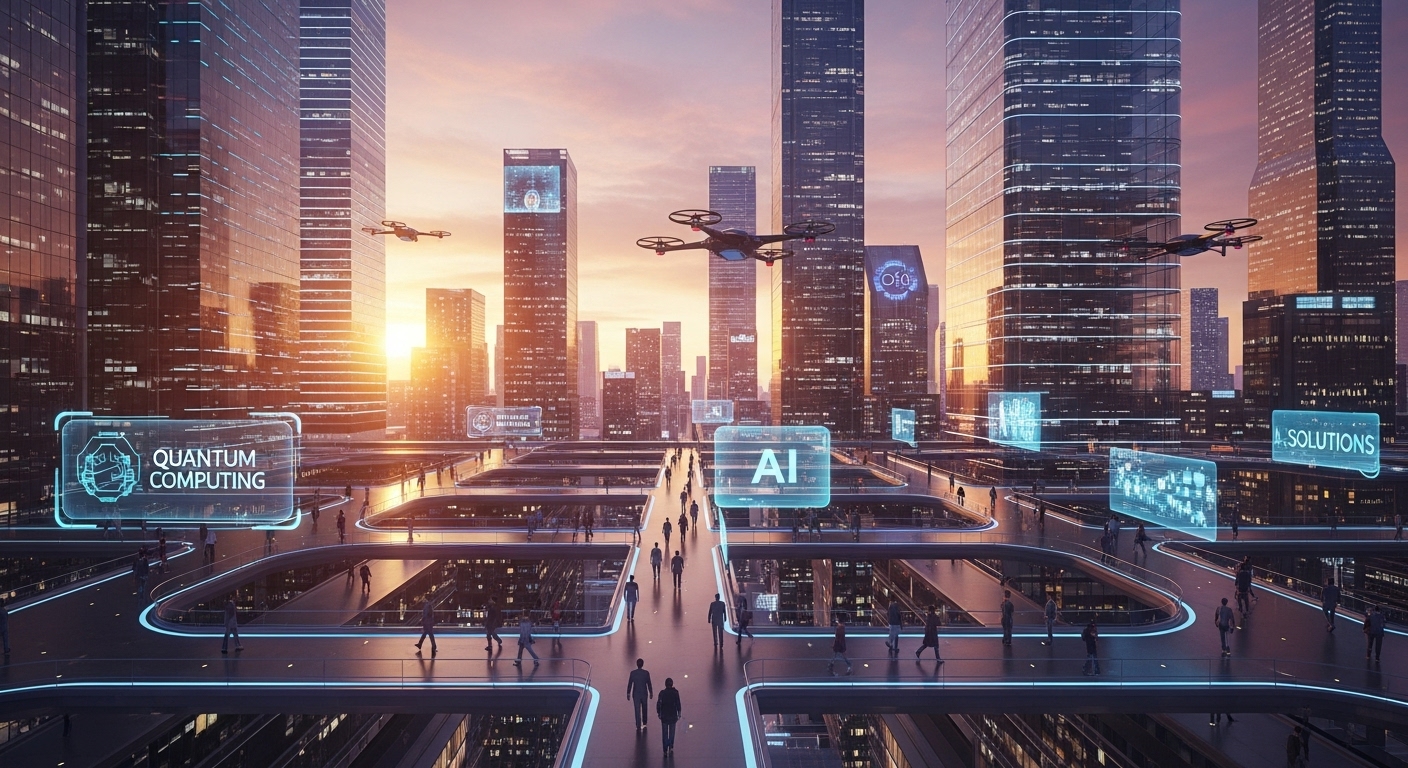
Looking ahead, the pace of innovation shows no signs of slowing. Technologies once considered science fiction are fast becoming reality.
Quantum Computing
Quantum computing promises to revolutionize data processing. Unlike traditional computers, which process bits as 0s or 1s, quantum computers use qubits that can represent multiple states simultaneously. This allows for exponentially faster computation, potentially solving problems in seconds that would take classical computers centuries.
Space Exploration and Colonization
Technology is also pushing humanity beyond Earth. Private companies and national agencies are developing spacecraft for lunar bases, Mars colonies, and asteroid mining. Advances in propulsion, robotics, and life-support systems are making space exploration more feasible than ever.
Biotechnology and Human Enhancement
Biotechnology will redefine what it means to be human. From lab-grown organs to gene editing, technology is blurring the lines between biology and machinery. Neural interfaces could one day allow direct communication between the brain and computers, expanding human cognition and capability.
Ethical and Social Challenges
With great technological power comes great responsibility. The ethical implications of emerging technologies are profound.
AI raises questions about privacy, bias, and control. Genetic engineering challenges ideas about natural evolution. Automation threatens traditional employment structures. As technology continues to evolve, society must grapple with moral, legal, and social questions to ensure that progress remains humane and equitable.
Ethical governance, international cooperation, and public awareness will be essential in navigating this new frontier. Technology must serve humanity—not the other way around.
Conclusion: Humanity and Technology—An Endless Partnership
The story of technology is ultimately the story of humanity itself. From the first spark of fire to the algorithms that power our digital world, every innovation has reflected our desire to improve, connect, and understand.
Technology is not a force separate from us—it is our creation, our mirror, and our tool. It amplifies our intelligence, extends our reach, and reveals our potential. Yet it also tests our wisdom, forcing us to confront the consequences of our inventions.
As we move deeper into the digital age, one truth remains clear: the future of technology depends not only on what we can build but also on how responsibly we choose to build it. The partnership between human ingenuity and technological progress will continue to shape the destiny of our species—one breakthrough at a time.