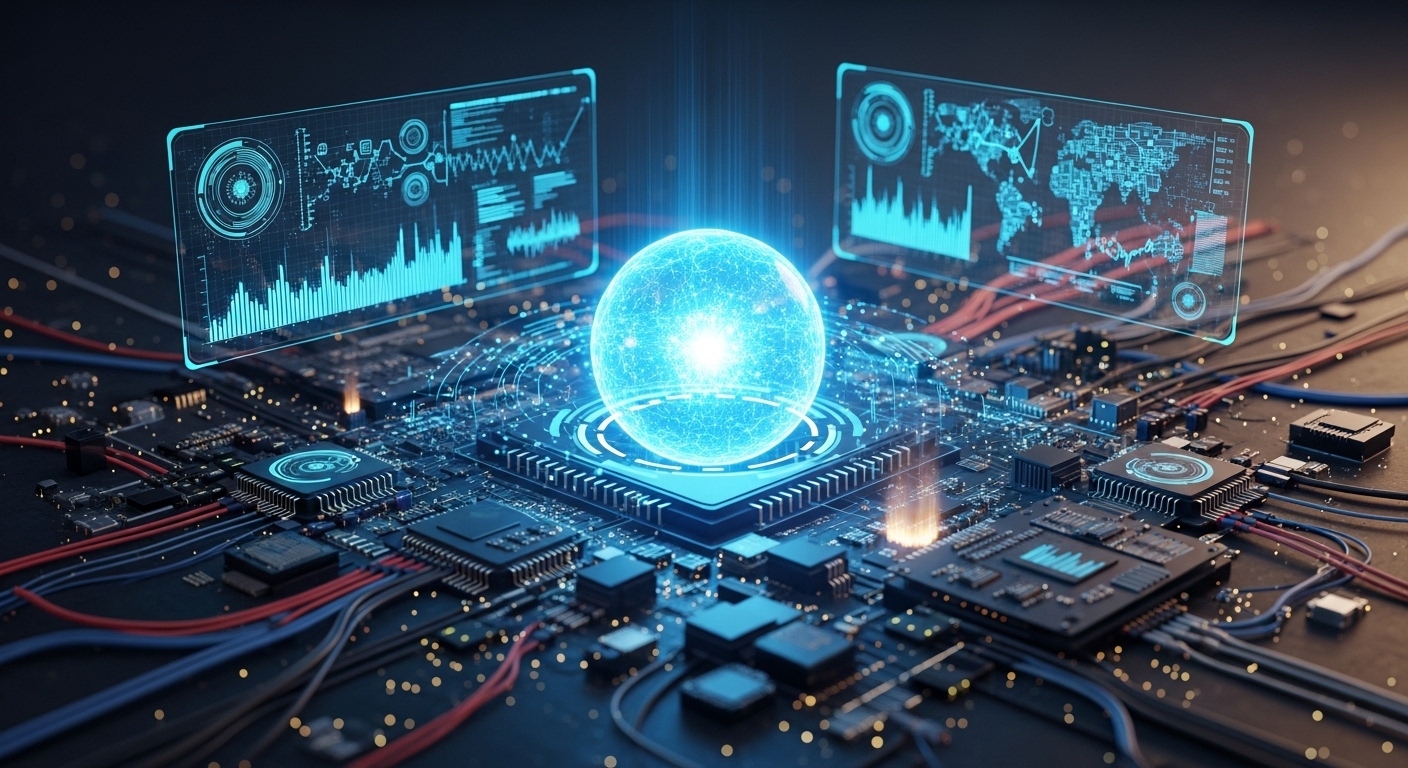





Technology is no longer just a tool that makes our lives easier; it has become the driving force behind societal transformation, economic growth, and human progress. From artificial intelligence to blockchain, from quantum computing to the Internet of Things, innovations today are reshaping industries, enhancing human capabilities, and challenging the way we think about our future. This blog explores the major technological trends of our era, their implications, and how they are redefining the way we live, work, and interact.
Artificial Intelligence: Redefining Intelligence
Artificial Intelligence (AI) has moved from research laboratories into the mainstream, powering applications that were once considered science fiction. AI systems can perform tasks that traditionally required human intelligence, such as understanding language, recognizing patterns, making decisions, and even predicting future outcomes. Machine learning, a subset of AI, allows computers to learn from data, improving their performance over time without explicit programming.
AI is revolutionizing industries across the globe. In healthcare, AI algorithms analyze medical images to detect diseases early, recommend treatments, and even predict patient outcomes. In finance, AI models forecast market trends, manage risk, and optimize investment strategies. Retail companies use AI to deliver personalized customer experiences, recommending products based on behavior and preferences. Even creative industries are leveraging AI for music composition, writing assistance, and visual design.
Despite its many benefits, AI also presents ethical and societal challenges. Job displacement, algorithmic bias, and privacy concerns are central issues that must be addressed. For AI to be a force for good, ethical frameworks and responsible use policies must guide its development and deployment.
Quantum Computing: Unlocking New Frontiers
Quantum computing represents a revolutionary approach to processing information. Unlike classical computers that rely on bits representing either 0 or 1, quantum computers use qubits, which can exist in multiple states simultaneously due to a property called superposition. This allows quantum computers to solve complex problems exponentially faster than traditional machines.
The potential applications of quantum computing are vast. In medicine, quantum simulations can model molecular interactions, accelerating drug discovery and enabling personalized treatments. In cryptography, quantum computers challenge traditional encryption methods, driving the need for advanced security protocols. Industries like logistics, finance, and energy can use quantum algorithms to optimize complex operations, reducing costs and increasing efficiency.
Although quantum computing is still in the experimental stage, ongoing research is making significant progress. As the technology matures, it promises to redefine computational limits and enable solutions to problems previously considered unsolvable.
Internet of Things: Connecting the World
The Internet of Things (IoT) is transforming everyday objects into smart devices capable of collecting, sharing, and analyzing data. From smart home appliances to industrial sensors, IoT is creating an interconnected ecosystem that improves convenience, efficiency, and decision-making.
Smart cities are leveraging IoT to optimize traffic flow, monitor air quality, and manage energy consumption. In agriculture, connected sensors track soil moisture and crop health, enabling precision farming that conserves resources and increases yields. Wearable devices monitor health metrics such as heart rate, sleep patterns, and activity levels, empowering individuals to take control of their well-being.
However, the widespread adoption of IoT also introduces risks. Each connected device is a potential target for cyberattacks, and the collection of vast amounts of personal data raises privacy concerns. Ensuring robust security and transparent data policies is essential to maximize the benefits of IoT while minimizing risks.
Blockchain: Beyond Cryptocurrency
Blockchain technology is often associated with cryptocurrencies, but its applications extend far beyond digital money. Blockchain is a decentralized and immutable ledger that enhances transparency, security, and trust in digital transactions. It has the potential to transform industries such as finance, supply chain management, healthcare, and governance.
In supply chains, blockchain provides visibility from production to delivery, allowing businesses and consumers to verify the authenticity of products. Healthcare systems can securely share patient data among authorized providers, improving treatment outcomes and privacy protection. Smart contracts—self-executing agreements on the blockchain—automate processes in legal, financial, and commercial contexts, reducing errors and increasing efficiency.
Despite its promise, blockchain faces challenges, including scalability issues, high energy consumption, and regulatory uncertainty. As the technology evolves, it could redefine how businesses operate and how trust is established in the digital world.
Human-Computer Interaction: Making Technology Intuitive
The way humans interact with computers is undergoing a significant transformation. Traditional interfaces such as keyboards and touchscreens are giving way to voice commands, gestures, augmented reality, and brain-computer interfaces. These innovations make technology more intuitive, immersive, and accessible.
Voice assistants are now ubiquitous, enabling users to perform tasks using natural language. Augmented reality (AR) and virtual reality (VR) provide immersive experiences for education, training, and entertainment. Brain-computer interfaces, though still experimental, hold the potential to allow humans to control devices using neural signals, particularly benefiting individuals with disabilities.
This evolution in human-computer interaction is not just about convenience—it is about creating technology that understands human intent, adapts to our needs, and enhances productivity. As interfaces become more natural, the line between digital and physical reality continues to blur.
Sustainable Technology: Innovation with Responsibility
With rapid technological growth comes the responsibility to minimize environmental impact. The production, usage, and disposal of electronic devices, as well as the energy demands of data centers and blockchain operations, contribute to ecological challenges. Sustainable technology focuses on reducing these impacts while promoting innovation.
Green computing emphasizes energy-efficient hardware, optimized software, and responsible e-waste management. Data centers are increasingly adopting renewable energy solutions and efficient cooling systems. Innovations in battery storage, solar energy, and electric vehicles are transforming energy consumption and transportation, helping create a more sustainable world.
Sustainable technology is not just an environmental necessity—it also makes economic sense. Consumers and investors are prioritizing companies that integrate sustainable practices, proving that innovation and environmental responsibility can coexist.
Ethics in Technology: Navigating a Complex Landscape
As technology grows more capable, ethical considerations become increasingly important. AI, genetic engineering, surveillance systems, and data-driven decision-making raise questions about accountability, fairness, and privacy. Who is responsible when a machine makes a harmful decision? How do we regulate emerging technologies to prevent misuse? How do we protect individual rights in a hyper-connected world?
Developing ethical frameworks ensures that technological progress aligns with human values. Governments, companies, and researchers must collaborate to establish standards that prioritize transparency, inclusivity, and accountability. Ethical technology builds trust and ensures that innovations serve society as a whole.
Preparing for a Tech-Driven Future
The pace of technological change requires individuals and organizations to adapt continuously. Digital literacy and lifelong learning are essential to navigating a world dominated by AI, IoT, blockchain, and other emerging technologies. Understanding these tools allows individuals to leverage them effectively and responsibly.
Organizations must adopt flexible strategies, integrating technology without disrupting operations. Workforce development programs should focus on human-machine collaboration, combining technical skills with creativity and critical thinking. Education systems must evolve to prepare future generations for a tech-driven world, emphasizing problem-solving, ethical reasoning, and adaptability.
Technology as a Force for Progress
The potential of technology to solve humanity’s biggest challenges is immense. Innovations in healthcare, education, energy, and transportation can improve quality of life, reduce inequality, and foster global development. However, this potential can only be realized if technological progress is guided by ethics, sustainability, and inclusivity.
Collaboration among governments, businesses, researchers, and individuals is essential to shaping a future where technology serves the common good. By embracing responsible practices and continuous learning, society can ensure that technological advancements empower people, enhance productivity, and drive meaningful progress.
Conclusion: Embracing the Era of Intelligent Innovation
The technological landscape is evolving faster than ever. AI, quantum computing, IoT, blockchain, and sustainable technologies are transforming every aspect of human life. These innovations offer tremendous opportunities but also present challenges related to ethics, privacy, and environmental responsibility.
The key to a positive future lies in balancing innovation with accountability. By promoting ethical practices, sustainable development, and education, humanity can harness technology to improve lives, enhance productivity, and create a more equitable world. The era of intelligent innovation has arrived, and it is up to us to ensure that technology serves as a force for human progress.